From concern to action: The Silicon Valley Barcode of Life

From concern to action: The Silicon Valley Barcode of Life

From concern to action: The Silicon Valley Barcode of Life

 Volunteers at DNA Barcoding Bioblitz, Hidden Villa Farm and Wilderness Center, June 2018. PHOTO CREDIT: Dan Quinn

Human destabilization of climate with its current and future costs and suffering make headlines daily. Related yet to some extent independent, the most current mass extinction—the seventh1 event of its kind in the nearly four billion years since life appeared on Earth—with potentially greater adverse impacts2 receives severalfold less attention3. We began the Silicon Valley Barcode of Life to further iBOL’s work to address this imbalance.


We grew up in Palo Alto, exploring nature in our yard, on the nearby 8,800 acre Stanford University campus, and in regional open space spanning San Francisco Bay marshes, Coast Range grassland, chaparral, and redwood forests, and Pacific Coast beaches. From an early age we participated in, and more recently we’ve led others in habitat stewardship fieldwork.

Songbirds like the hooded oriole (Icterus cucullatus) and cedar waxwing (Bombycilla cedrorum), once common visitors to our yard, now come rarely if at all.

We’ve observed firsthand how humans are diminishing biodiversity. As property owners in our community have covered more land with buildings and paving, they’ve reduced and fragmented habitat4. Songbirds like the hooded oriole (Icterus cucullatus) and cedar waxwing (Bombycilla cedrorum), once common visitors to our yard, now come rarely if at all. As we and those around us have relied increasingly upon products imported from around the world, we’ve introduced pests and invasive species that disrupt long-standing ecological relationships5. Oak Sudden Death, caused by a water mold (Phytophthora ramorum) thought to have entered the United States via the nursery plant trade, has killed tanoak (Notholithocarpus densiflorus) and coast live oak (Quercus agrifolia) in some of our favorite hiking spots and far beyond.

PHOTO CREDIT: Jen Bayer

Feeling concern about losing the living nature we love, we’re acting to preserve it. In 2018, inspired by conservationists Daniel Janzen’s and Winnie Hallwachs’ biodiversity protection and advocacy in Årea de Conservación Guanacaste, and San Diego Barcode of Life founder Bradley Zlotnick’s biodiversity cataloging and education achievements in Southern California, we launched the Silicon Valley Barcode of Life with the purpose of using DNA barcoding to engage people in cataloging biodiversity, in learning about the importance of biodiversity to human well-being and about threats to it, and in acting to conserve it.

Taxonomy wheel graphic

Taxonomic distribution of biodiversity collected at Hidden Villa DNA Barcoding Bioblitz, June 2018. Colors in the heat tree indicate the number of samples detected.

IMAGE CREDIT: Hilary Bayer

To date we’ve actively engaged more than a hundred volunteers, directly addressed more than a thousand people in-person (pre-pandemic) and subsequent online events, and indirectly addressed several thousands more in published writing and through our website. We’ve also hand-collected 600 specimens from diverse ecosystems in Santa Clara and San Mateo counties, and collected nearly 30,000 additional specimens from Malaise traps deployed in partnership with Stanford University’s Fukami Lab, the City of Palo Alto, and Hidden Villa Organic Farm and Wilderness Center.

In 2021 we were offered an opportunity to partner with the Mono Lake Committee to study arthropods of the Mono Basin. Though Mono Lake is several hundred miles across California from the Silicon Valley, we’ve vacationed in the Sierra Nevada with our family for as long as we can remember, and we’re grateful to be able to contribute to protecting its biodiversity.

In our first round of collections, we gathered 250 unique specimens within a 50-mile radius of Mono Lake by hand. With pit traps and a Malaise trap on Mono Lake Committee properties, including the Outdoor Education Center visited by hundreds of students annually, we gathered about 4,000 additional specimens.

Mantidfly

Mantidfly, family Mantispidae.
PHOTO CREDIT: Jen Bayer

Scarabeidae beetle

Monkey beetle, genus Hoplia, family Scarabaeidae PHOTO CREDIT: Jen Bayer

In 2022 we’re continuing to catalog arthropods of Silicon Valley and of the Mono Basin. In both places we have plans to deploy additional Malaise traps in partnership with local conservation and educational organizations and proceed with hand collection, engaging volunteers in these activities and in specimen processing.

We’re demonstrating how DNA barcoding can be a means to quickly and cost-effectively catalog biodiversity and thereby contribute to global and local libraries of life—a resource on which many can rely to inform science-based stewardship and enrich educational programs.
“We’re demonstrating how DNA barcoding can be a means to quickly and cost-effectively catalogue biodiversity and thereby contribute to global and local libraries of life—a resource on which many can rely to inform science-based stewardship and enrich educational programs.”

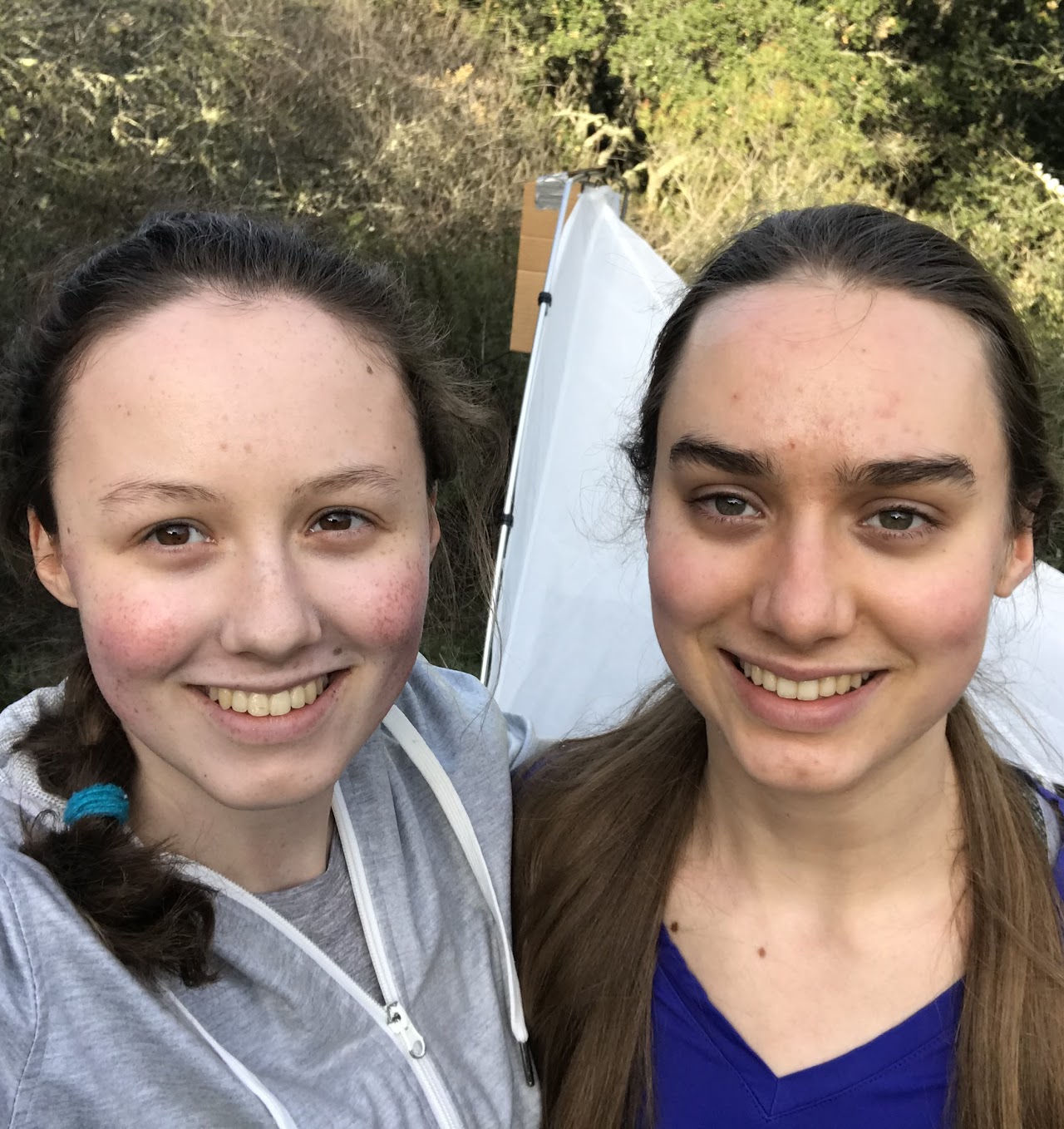
Jen and Hilary Bayer, co-founders of
Silicon Valley Barcode of Life, in front of
their first Malaise trap.

We’re looking for partners.

Silicon Valley Barcode of Life is an all-volunteer endeavor made possible by dedicated advisors, generous donors, institutional partners who share our goals, and volunteers.

Please contact us if you’re interested in assisting Silicon Valley Barcode of Life with funding, macro photography, graphic design, data uploading, Malaise trap servicing, or hand collection.

You can reach us at svbarcodeoflife@gmail.com

We gratefully acknowledge the Consulate of Canada in San Diego for kindly supporting us in facilitating this partnership with the International Barcode of Life Consortium, and the staff at the Centre for Biodiversity Genomics for the ways they’ve assisted us in learning and contributing.

References:

1. Michael R. Rampino & Shu-Zhong Shen (2019): The end-Guadalupian (259.8 Ma) biodiversity crisis: the sixth major mass extinction? Historical Biology 33(1):1-7. DOI: 10.1080/08912963.2019.1658096

2. Cardinale BJ et al (2012) Biodiversity loss and its impact on humanity. Nature 486(7401):59-67. DOI: 10.1038/nature11148.

3. Legagneux1 P et al (2018) Our house is burning: Discrepancy in climate change vs. biodiversity coverage in the media as compared to scientific literature. Front. Ecol. Evol. 5:175. doi: 10.3389/fevo.2017.00175

4. University of Exeter. (2018, April 13). Crowded urban areas have fewer songbirds per person. ScienceDaily. Retrieved  from https://www.sciencedaily.com/releases/2018/04/180413093836.htm

5. Dawson W et al (2017). Global hotspots and correlates of alien species richness across taxonomic groups. Nature Ecology and Evolution 1: 0186. DOI: 10.1038/s41559-017-0186.

Written by
Silicon Valley Barcode of Life
Palo Alto, USA
Hilary Bayer

Hilary Bayer

Silicon Valley Barcode of Life
Palo Alto, USA

Don't Miss Out!

Subscribe to the iBOL Barcode Bulletin for updates on DNA barcoding efforts, the iBOL Consortium, and more.

[mc4wp_form]

comment on this article

The Barcode Bulletin moderates comments to promote an informed and courteous conversation. Abusive, profane, self-promotional, or incoherent comments will be rejected. 
Starving for data and more: what rangers and scientists stand to learn from one another in South Africa

Starving for data and more: what rangers and scientists stand to learn from one another in South Africa

Starving for data and more: what rangers and scientists stand to learn from one another in South Africa

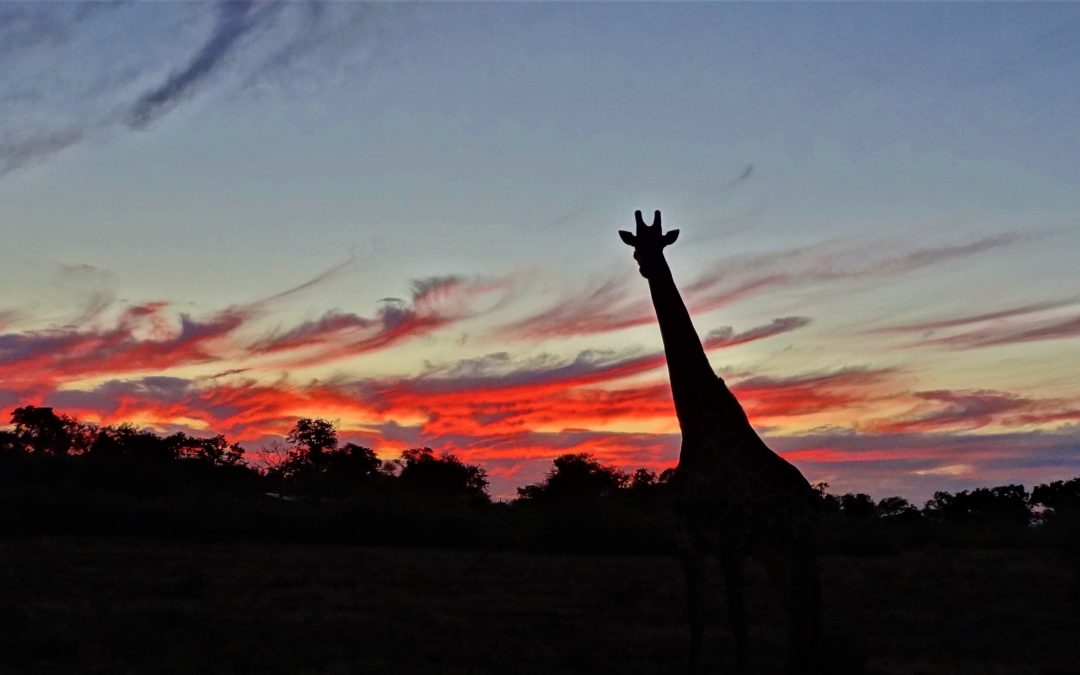
Silhouette of a giraffe in Kruger National Park, South Africa

PHOTO CREDIT: Michelle D’Souza

Insect biodiversity is understudied and often underappreciated. As evidence for large-scale insect declines emerge, there is an increasing need to address the extreme lack of data on the general ecology and population dynamics of most insect groups. Charismatic species, such as the iconic monarch butterflies (Danaus plexippus) of the Americas, are one of the few exceptions.

Closely related to the migratory Danaus plexippus, the non-migratory monarch species – Danaus chrysippus – is found in the warm climate of the African continent.
PHOTO CREDIT: Johandre van Rooyen

The caterpillars of the Emperor moth (Gonimbrasia belina) are just as iconic and societally relevant on the African continent. Locally referred to as ‘mopane worms’ after the mopane trees upon which they primarily feed, these insects have been a vital source of protein for generations. A mopane caterpillar contains on average 50 per cent protein1, a higher percentage than the average steak.

In recent years, mopane caterpillars have also provided an important source of income for many rural communities. It has been estimated that 9.5 billion caterpillars are harvested annually in Southern Africa’s 20,000 km2 of mopane forest. The ability to predict mopane caterpillar outbreaks in space and time becomes increasingly valuable, particularly for rural communities living along the borders of national parks, who rely heavily on natural resources to supplement their livelihood.

Mopane worm harvest in Kruger National Park, South Africa.
PHOTO CREDIT: Louise Swemmer

Local community members harvesting mopane worms in the Kruger.
PHOTO CREDIT: Louise Swemmer

Since 2010, permit-based harvesting projects have taken place in some South African National parks to share benefits and build positive relationships between the parks and their neighbouring communities. With the declining occurrence of mopane caterpillars outside of protected areas due to habitat change and over-harvesting, and the overall erratic nature of recent outbreaks, neighbouring communities risk losing an important source of food and income.

A better understanding of insect dynamics has the potential to inform the sustainable harvest of natural resources such as the mopane caterpillar, but it also tells us a lot more.

A pilot insect biomonitoring program in Kruger National Park, South Africa – the Kruger Malaise Program – is already demonstrating implications for natural resource harvesting, as well as agricultural pest and disease management. Perhaps even more significant, it has reignited energy in park rangers about biodiversity conservation.

One of 26 Malaise traps sampling insects in Kruger National Park with the Kruger Malaise Program.
PHOTO CREDIT: Ryan Rattray

The Kruger Malaise Program (KMP), a year-long monitoring effort, was undertaken in Kruger Park from May 2018 to June 2019. With the main goal of understanding insect diversity and seasonal variation, the program deployed 26 Malaise traps that sampled the flying insect community in all 22 sections of the park. Traps were set up within each section ranger’s property, and rangers were tasked with organizing and maintaining weekly sample collections. The samples were then retrieved in four large batches over the year by staff from the African Centre for DNA Barcoding (ACDB) in Johannesburg, South Africa, where they were packaged and shipped to the Centre for Biodiversity Genomics (CBG) in Guelph, Ontario, Canada for DNA barcode analysis. This program was only possible due to the collaborative efforts of park rangers and staff, researchers at the Savanna & Arid Research Unit in Skukuza, Kruger, and scientists at the ACDB and CBG.

The African Centre for DNA Barcoding (ACDB) team after collecting the last Malaise trap at the end of the KMP in June 2019: Zandisile Shongwe, Nolo Sello, Michelle van der Bank (ACDB Director), Ross Stewart, Jonathan Davies (top left to right), Johandre van Rooyen (bottom).
PHOTO CREDIT: Nolo Sello

With sampling now complete, analysis has begun in earnest. So far, more than 260,000 specimens have been processed, and 170,000 have been sequenced.  Preliminary results have delivered barcode coverage for 9,000 species including various agricultural pests (e.g., the olive fruit fly (Bactrocera oleae), and the rusty plum aphid (Hysteroneura setariae)) as well as several vector species known to transmit the bluetongue and African horse sickness viruses (e.g., Culicoides imicola) and West Nile Virus (Culex perexiguus). When compared against the DNA barcode database (BOLD Systems) of more than 600,000 species, almost half of the insect diversity uncovered by the program so far is only found in Kruger. Based on species accumulation rates, it is likely that 25,000 species will be recorded in the park. This number represents more than half of the species previously reported from South Africa2, and quarter of those described in sub-Saharan Africa3.

Selection of specimens collected from the Kruger Malaise Program.
PHOTO CREDIT: CBG Imaging Lab

The Kruger Malaise Program reveals just how quickly DNA barcoding can provide in-depth and broad-scale information for regions where past research has largely been focused on particular taxonomic groups.  While one of the only comprehensive field guides for insects in South Africa contains 1,200 species – those that are ‘abundant, widespread, conspicuous, large or unusual’ – the Kruger Malaise program has largely uncovered the rare, small, inconspicuous, yet ecologically important, species.

In 2013, SANParks developed a biodiversity monitoring strategy but its activation has been very mixed across the 19 parks. Some began their monitoring efforts by focusing on rare species, while others used key indicator groups. But there have been no standardized techniques implemented across all parks, and there has been little monitoring of insects at a large scale, mainly because of the lack of taxonomic expertise. A program involving DNA technology makes large-scale biomonitoring of these national parks possible.

The KMP has been a huge success with the next steps set to fine tune logistics before its expansion to other parks and, ideally, to identify specific sites in Kruger for ongoing monitoring. The program also provided a test bed for TRACE (Tracking the Response of Arthropod Communities to Changing Environments), a major research theme within the 7-year, $180 million BIOSCAN program. Its success has demonstrated the feasibility of extending this work in other national parks within South Africa and on a global scale. In doing so, BIOSCAN will lay the foundation for a DNA-based global biodiversity observation system, similar to the monitoring systems that have been recording weather patterns since the 1800s. BIOSCAN has a grand vision, one that is necessary if we are to truly identify, understand, and manage the global decline in insects.

The park rangers and staff who managed the Malaise traps in Kruger National Park.
PHOTO CREDIT: Michelle D’Souza

But if you ask the people working in Kruger, the KMP was more than a biodiversity monitoring program. Most rangers start out as nature conservation and zoology students, but anti-poaching efforts are so time consuming that their roles have gone from biodiversity managers to single-species protectors. The KMP has not only sparked interest and reignited energy in the park rangers about their conservation work, it has engaged and valued the observational and experiential data that rangers have to offer, such as stories and strategies related to the mopane caterpillars.

In this way, the KMP has made a very big impact – and that is the true beauty of the program – its ability to spur interest in insect life, and the patterns and processes that define our world.

Please feel free to contact Michelle D’Souza, the KMP project manager, if you have any questions about the program: mdsouza@uoguelph.ca

References:

1. Glew RH, Jackson D, Sena L, VanderJagt DJ, Pastuszyn A and Millson M (1999) Gonimbrasia belina (Lepidoptera: Saturniidae): a Nutritional Food Source Rich in Protein, Fatty Acids, and Minerals. American Entomologist 45(4): 250–253

2. Scholtz CH and Chown SL (1995) Insects in southern Africa: how many species are there? South African Journal of Science 91:124–126

3. Miller SE and Rogo LM (2002) Challenges and opportunities in understanding and utilisation of African insect diversity. Cimbebasia 17:197–218

Written by

Michelle L. D'Souza

Michelle L. D'Souza

Centre for Biodiversity Genomics, Guelph, ON, Canada

Danny Govender

Danny Govender

General Manager: Savanna and Arid Research Unit, South Africa

doi: 10.21083/ibol.v9i1.5471

Don't Miss Out!

Subscribe to the iBOL Barcode Bulletin for updates on DNA barcoding efforts, the iBOL Consortium, and more.

[mc4wp_form]

comment on this article

The Barcode Bulletin moderates comments to promote an informed and courteous conversation. Abusive, profane, self-promotional, or incoherent comments will be rejected.