

From concern to action: The Silicon Valley Barcode of Life
From concern to action: The Silicon Valley Barcode of Life

Volunteers at DNA Barcoding Bioblitz, Hidden Villa Farm and Wilderness Center, June 2018. PHOTO CREDIT: Dan Quinn
Human destabilization of climate with its current and future costs and suffering make headlines daily. Related yet to some extent independent, the most current mass extinction—the seventh1 event of its kind in the nearly four billion years since life appeared on Earth—with potentially greater adverse impacts2 receives severalfold less attention3. We began the Silicon Valley Barcode of Life to further iBOL’s work to address this imbalance.
We grew up in Palo Alto, exploring nature in our yard, on the nearby 8,800 acre Stanford University campus, and in regional open space spanning San Francisco Bay marshes, Coast Range grassland, chaparral, and redwood forests, and Pacific Coast beaches. From an early age we participated in, and more recently we’ve led others in habitat stewardship fieldwork.
Songbirds like the hooded oriole (Icterus cucullatus) and cedar waxwing (Bombycilla cedrorum), once common visitors to our yard, now come rarely if at all.
We’ve observed firsthand how humans are diminishing biodiversity. As property owners in our community have covered more land with buildings and paving, they’ve reduced and fragmented habitat4. Songbirds like the hooded oriole (Icterus cucullatus) and cedar waxwing (Bombycilla cedrorum), once common visitors to our yard, now come rarely if at all. As we and those around us have relied increasingly upon products imported from around the world, we’ve introduced pests and invasive species that disrupt long-standing ecological relationships5. Oak Sudden Death, caused by a water mold (Phytophthora ramorum) thought to have entered the United States via the nursery plant trade, has killed tanoak (Notholithocarpus densiflorus) and coast live oak (Quercus agrifolia) in some of our favorite hiking spots and far beyond.

PHOTO CREDIT: Jen Bayer
Feeling concern about losing the living nature we love, we’re acting to preserve it. In 2018, inspired by conservationists Daniel Janzen’s and Winnie Hallwachs’ biodiversity protection and advocacy in Årea de Conservación Guanacaste, and San Diego Barcode of Life founder Bradley Zlotnick’s biodiversity cataloging and education achievements in Southern California, we launched the Silicon Valley Barcode of Life with the purpose of using DNA barcoding to engage people in cataloging biodiversity, in learning about the importance of biodiversity to human well-being and about threats to it, and in acting to conserve it.

Taxonomic distribution of biodiversity collected at Hidden Villa DNA Barcoding Bioblitz, June 2018. Colors in the heat tree indicate the number of samples detected.
IMAGE CREDIT: Hilary Bayer
To date we’ve actively engaged more than a hundred volunteers, directly addressed more than a thousand people in-person (pre-pandemic) and subsequent online events, and indirectly addressed several thousands more in published writing and through our website. We’ve also hand-collected 600 specimens from diverse ecosystems in Santa Clara and San Mateo counties, and collected nearly 30,000 additional specimens from Malaise traps deployed in partnership with Stanford University’s Fukami Lab, the City of Palo Alto, and Hidden Villa Organic Farm and Wilderness Center.
In 2021 we were offered an opportunity to partner with the Mono Lake Committee to study arthropods of the Mono Basin. Though Mono Lake is several hundred miles across California from the Silicon Valley, we’ve vacationed in the Sierra Nevada with our family for as long as we can remember, and we’re grateful to be able to contribute to protecting its biodiversity.
In our first round of collections, we gathered 250 unique specimens within a 50-mile radius of Mono Lake by hand. With pit traps and a Malaise trap on Mono Lake Committee properties, including the Outdoor Education Center visited by hundreds of students annually, we gathered about 4,000 additional specimens.

Mantidfly, family Mantispidae.
PHOTO CREDIT: Jen Bayer

Monkey beetle, genus Hoplia, family Scarabaeidae PHOTO CREDIT: Jen Bayer
In 2022 we’re continuing to catalog arthropods of Silicon Valley and of the Mono Basin. In both places we have plans to deploy additional Malaise traps in partnership with local conservation and educational organizations and proceed with hand collection, engaging volunteers in these activities and in specimen processing.
We’re demonstrating how DNA barcoding can be a means to quickly and cost-effectively catalog biodiversity and thereby contribute to global and local libraries of life—a resource on which many can rely to inform science-based stewardship and enrich educational programs.
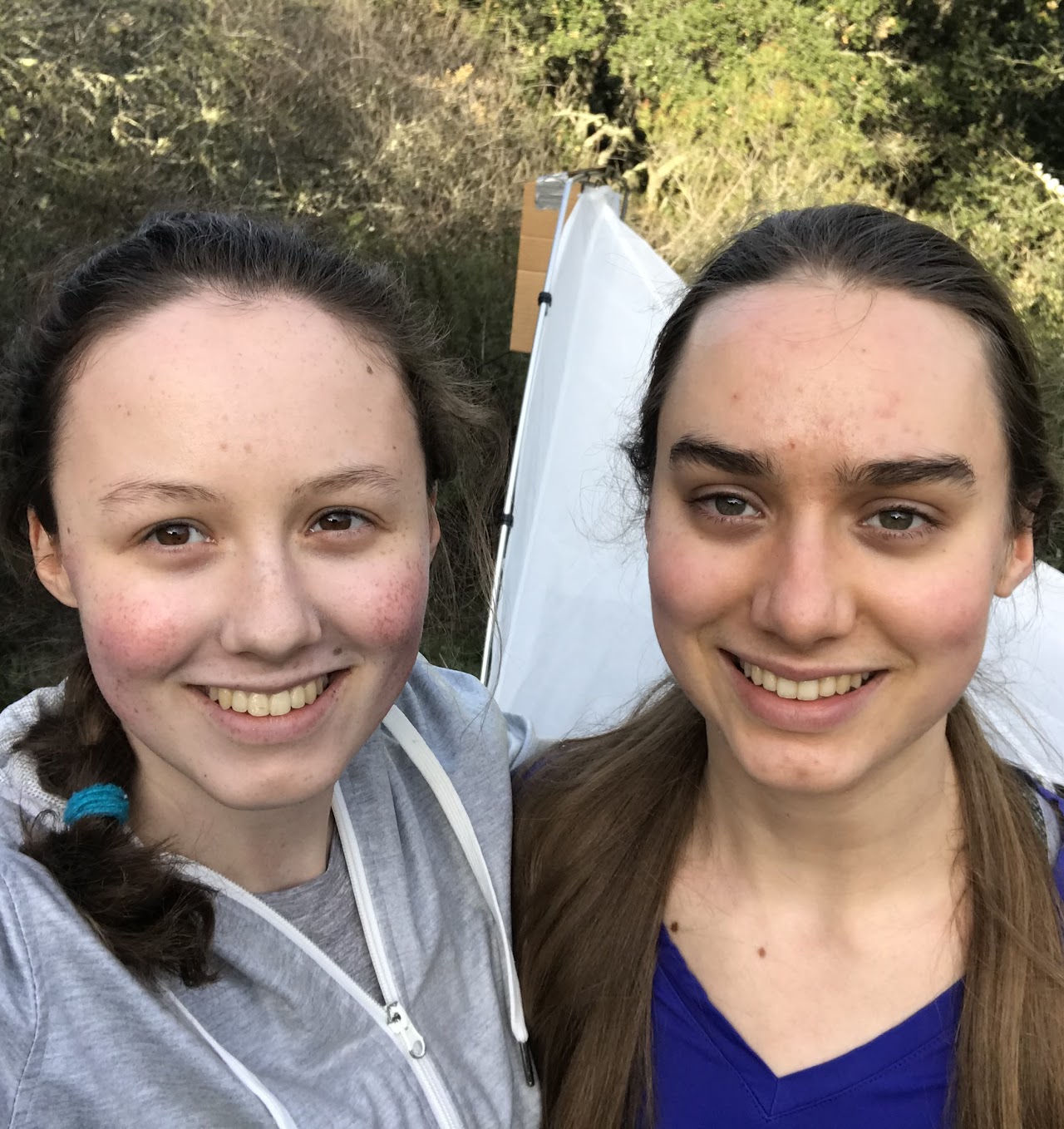
“We’re demonstrating how DNA barcoding can be a means to quickly and cost-effectively catalogue biodiversity and thereby contribute to global and local libraries of life—a resource on which many can rely to inform science-based stewardship and enrich educational programs.”
Jen and Hilary Bayer, co-founders of
Silicon Valley Barcode of Life, in front of
their first Malaise trap.
We’re looking for partners.
Silicon Valley Barcode of Life is an all-volunteer endeavor made possible by dedicated advisors, generous donors, institutional partners who share our goals, and volunteers.
Please contact us if you’re interested in assisting Silicon Valley Barcode of Life with funding, macro photography, graphic design, data uploading, Malaise trap servicing, or hand collection.
You can reach us at svbarcodeoflife@gmail.com
We gratefully acknowledge the Consulate of Canada in San Diego for kindly supporting us in facilitating this partnership with the International Barcode of Life Consortium, and the staff at the Centre for Biodiversity Genomics for the ways they’ve assisted us in learning and contributing.
References:
1. Michael R. Rampino & Shu-Zhong Shen (2019): The end-Guadalupian (259.8 Ma) biodiversity crisis: the sixth major mass extinction? Historical Biology 33(1):1-7. DOI: 10.1080/08912963.2019.1658096
2. Cardinale BJ et al (2012) Biodiversity loss and its impact on humanity. Nature 486(7401):59-67. DOI: 10.1038/nature11148.
3. Legagneux1 P et al (2018) Our house is burning: Discrepancy in climate change vs. biodiversity coverage in the media as compared to scientific literature. Front. Ecol. Evol. 5:175. doi: 10.3389/fevo.2017.00175
4. University of Exeter. (2018, April 13). Crowded urban areas have fewer songbirds per person. ScienceDaily. Retrieved from https://www.sciencedaily.com/releases/2018/04/180413093836.htm
5. Dawson W et al (2017). Global hotspots and correlates of alien species richness across taxonomic groups. Nature Ecology and Evolution 1: 0186. DOI: 10.1038/s41559-017-0186.
Written by
Palo Alto, USA

Hilary Bayer
Palo Alto, USA
Don't Miss Out!
Subscribe to the iBOL Barcode Bulletin for updates on DNA barcoding efforts, the iBOL Consortium, and more.
comment on this article
The Barcode Bulletin moderates comments to promote an informed and courteous conversation. Abusive, profane, self-promotional, or incoherent comments will be rejected.


