
BIOSCAN launches at iBOL Conference 2019
Trondheim, NorwayJune, 2019
The 8th International Barcode of Life Conference was held in Trondheim, Norway, 17-20 June 2019, hosted by the NTNU University Museum, the Norwegian Biodiversity Information Centre and NorBOL.
The iBOL conference takes place every two years and is a major international event, bringing together researchers and practitioners working in all the diverse fields that DNA barcoding and metabarcoding have impacted. This year’s conference brought together 450 participants from 61 nations, including 384 presenting authors.
Key Conference Research themes
As noted by Torbjørn Ekrem and his colleagues, the conference showcased several significant themes. One of these was the leading role being taken by Norway in developing barcoding solutions and the relevance of these efforts to understanding biodiversity and monitoring the environment in sensitive polar regions.All abstracts from the conference have been published as a special issue of Genome. 170 of the posters can be also accessed online.
Read more:
The conference hosts evaluated 120 oral and poster presentations by students and post docs and awarded eleven prizes.
Launch of BIOSCAN
The 2019 conference was the venue for the launch of BIOSCAN, iBOL’s new seven-year scientific program. Paul Hebert presented the vision for this program which will reveal species, their interactions, and dynamics. BIOSCAN will build on the success of the BARCODE 500K program (2010-2015) by (1) increasing the coverage to the barcode reference library to at least two million species and by (2) exploiting the power of new sequencing platforms to survey species communities at thousands of sites across different ecosystems and to (3) probe the biotic associations of millions of individual organisms.
These three components together lay the foundations for a global DNA-based monitoring system for biodiversity, by providing cost-effective ways for individual organisms anywhere to be identified to species, for species to be mapped through time and space, and for the associations between species to be revealed. The Global Malaise Program will be a core activity within BIOSCAN, enabling sampling of many poorly recorded insect groups. Other sampling schemes will be adopted to survey other groups and ecosystems.
Messages and Highlights from the Keynote speakers
Each of the four keynote presentations delivered at the conference provided a complementary perspective that further reinforces the importance of iBOL’s work and the benefits that can be expected from BIOSCAN.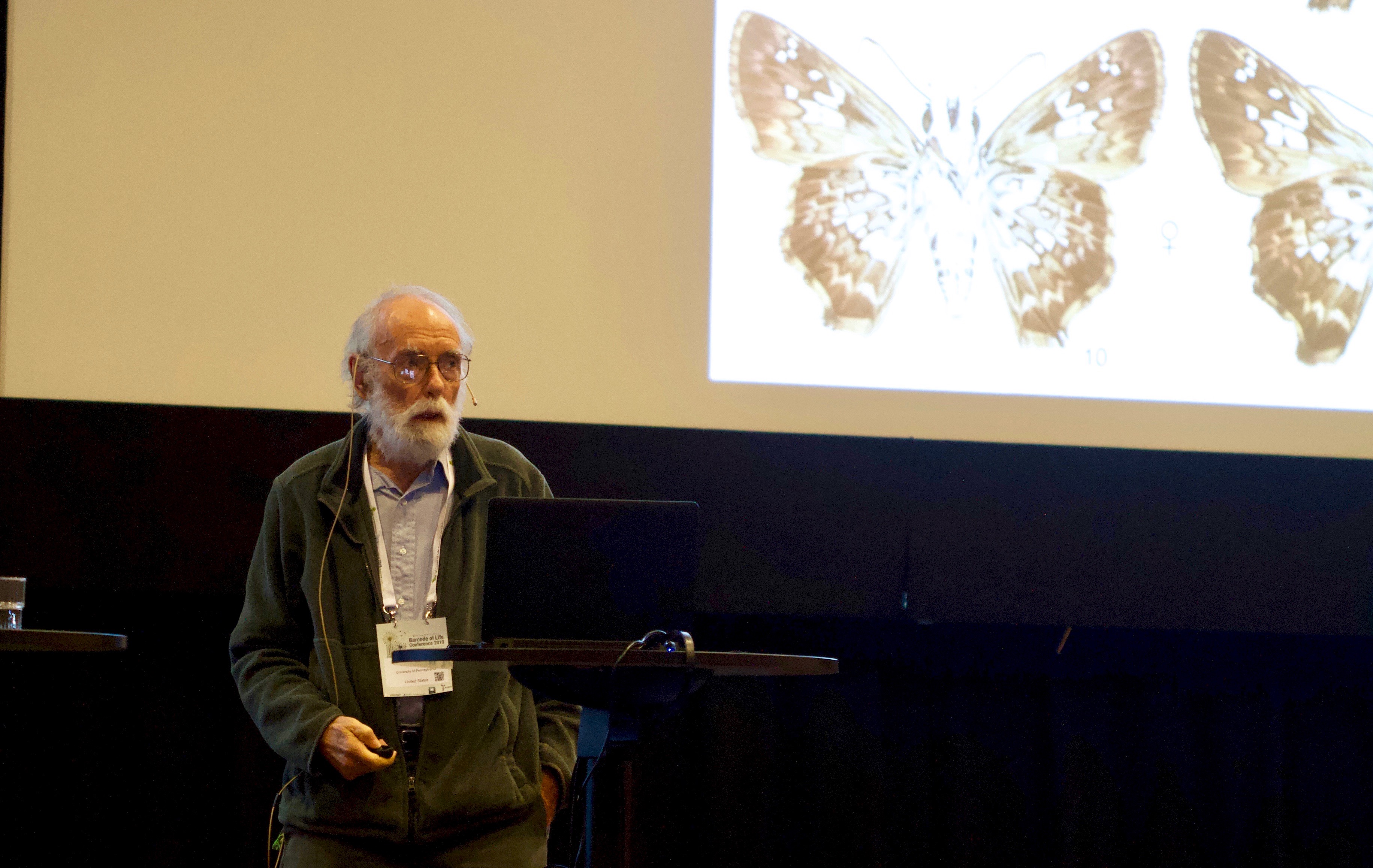
Dan Janzen (BioAlfa – to DNA barcode an entire tropical country for the survival of its biodiversity) reviewed the development of Costa Rica as a country committed to bioliteracy and how barcoding has been adopted as a fundamental component in the country’s plan to understand the natural treasures it contains. This builds on decades of work by researchers and parataxonomists centred on the Área de Conservación Guanacaste (ACG). Costa Rica has demonstrated a model for adoption by other megadiverse countries and one that the BIOSCAN program is well positioned to support for the benefit of each country and for the planet.
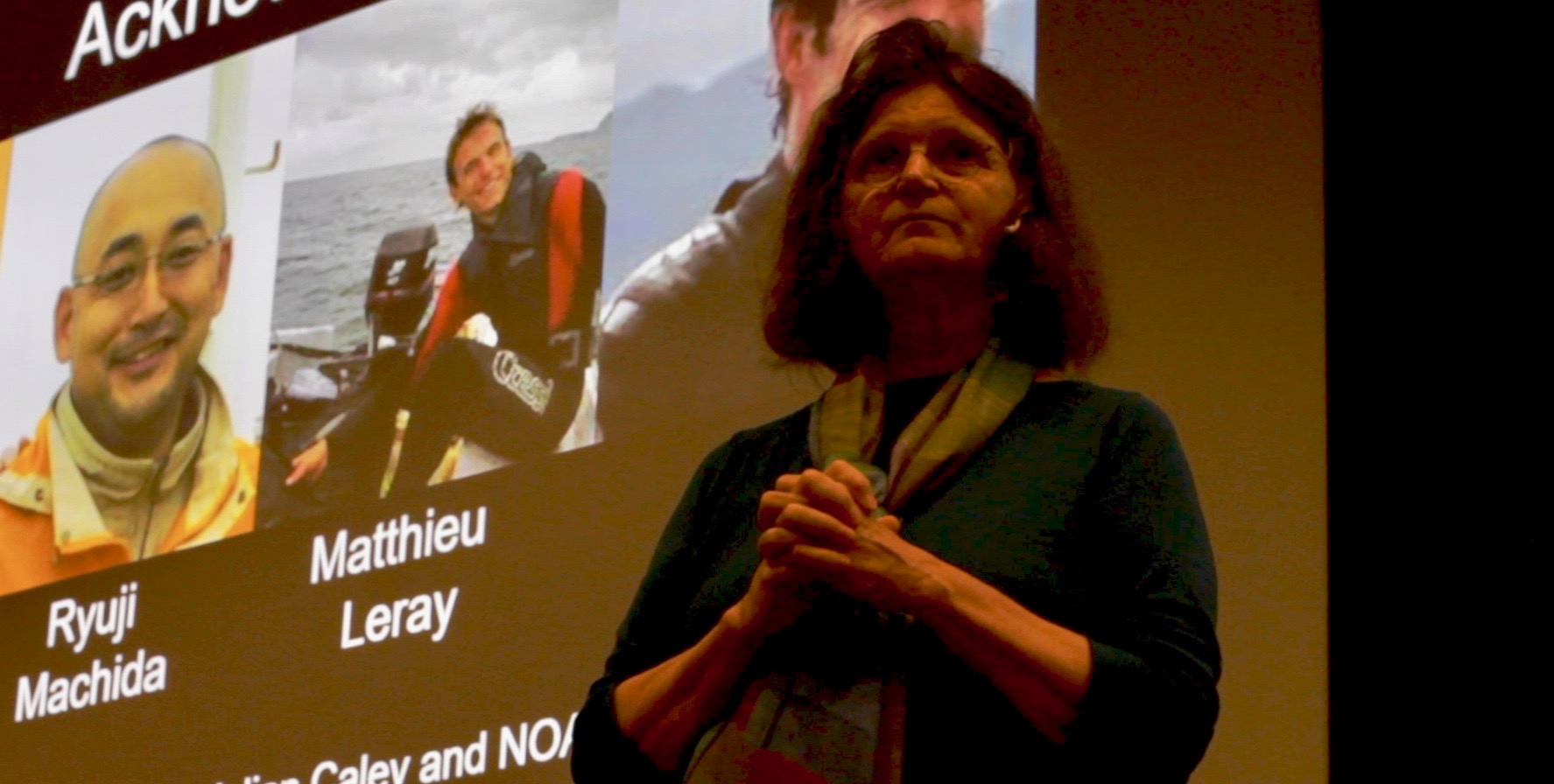
Nancy Knowlton (Censusing Coral Reefs in the 21st Century) reviewed the challenges we face and progress made in understanding the true extent of reef biodiversity. Autonomous Reef Monitoring Structures (ARMS) have been deployed in coral reefs around the world, acting as passive collectors of sessile organisms, small organisms and fish. Every one of these units shows the presence of hundreds of species, the majority of which cannot be matched to described taxa, often even at the phylum level. This serves to emphasise both the need for much more work to populate the barcode reference library for marine species and to survey reef ecosystems to understand the scale and complexity of these threatened systems
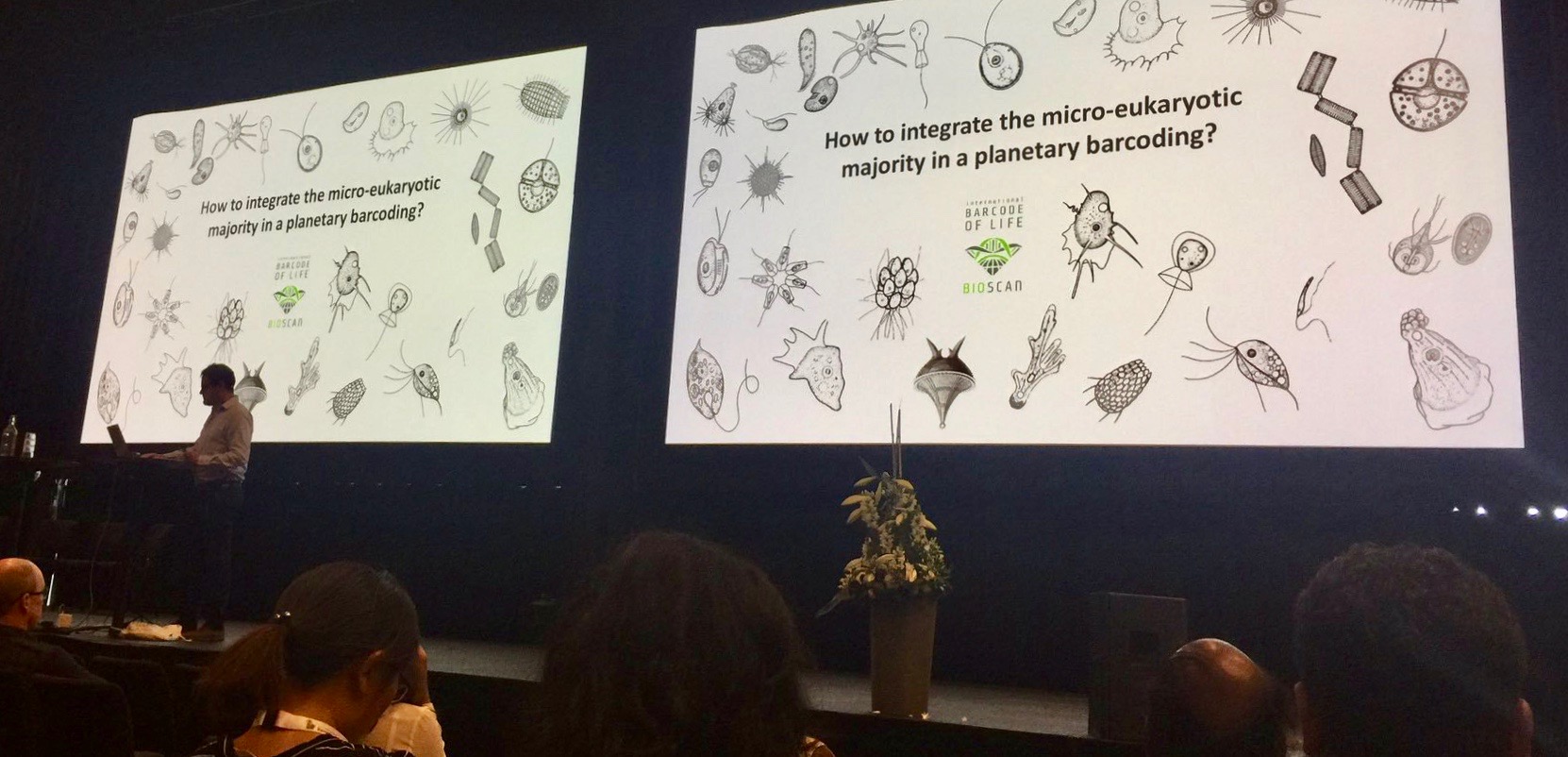
Columban de Vargas (GO-SEE: Global Ocean Systems Ecology & Evolution) presented the work of the interdisciplinary team on the schooner Tara to explore Earth’s plankton ecosystem. The findings from the Tara Oceans data derive primarily from metagenomics and metabarcoding efforts, supported with imaging technologies. Plankton diversity is significantly higher than previously understood and the greatest diversity is found among unicellular eukaryotes (protists). Physico-chemical parameters fail to explain most of the patterns detected, leading to the conclusion that poorly understood biotic interactions are central to the structure and dynamics of this ecosystem.
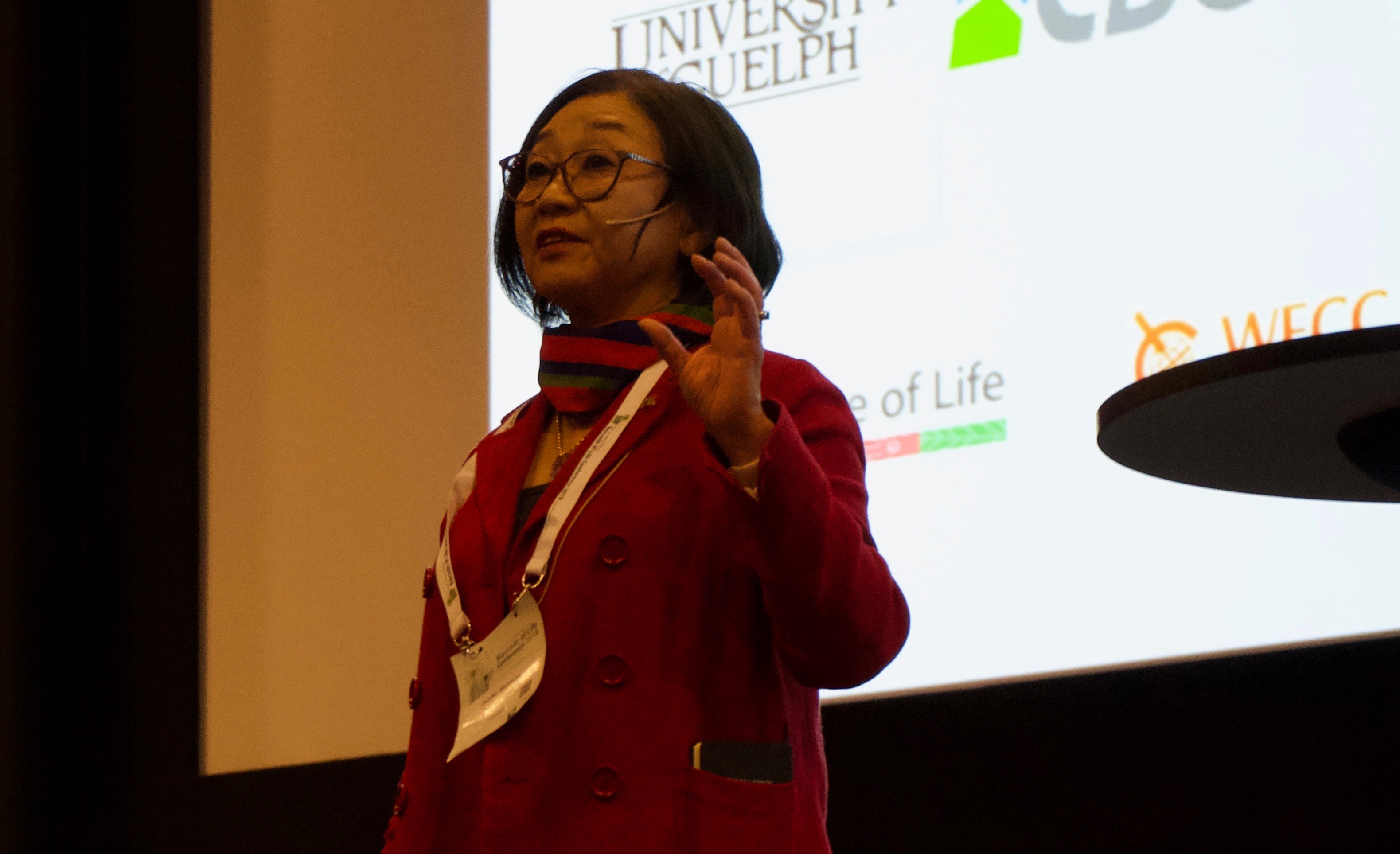
Junko Shimura (Overview of the outcomes of UN Biodiversity Conference 2018 and Q&A in relation to DNA barcoding) provided a complementary perspective, explaining how iBOL and DNA barcoding relate to the actions of the Convention for Biodiversity (CBD) to promote life in harmony with nature. Key current linkages include collaboration under the Global Taxonomy Initiative to support training in DNA barcoding as a capacity enhancement activity for the Parties to the CBD, and voluntary guidance for states to use barcoding as a tool to monitor invasive alien species. iBOL will continue to develop its important relationship with the CBD to ensure that the benefits from barcoding and metabarcoding benefit stakeholders in all regions.
Meeting of the SCience COmmittee
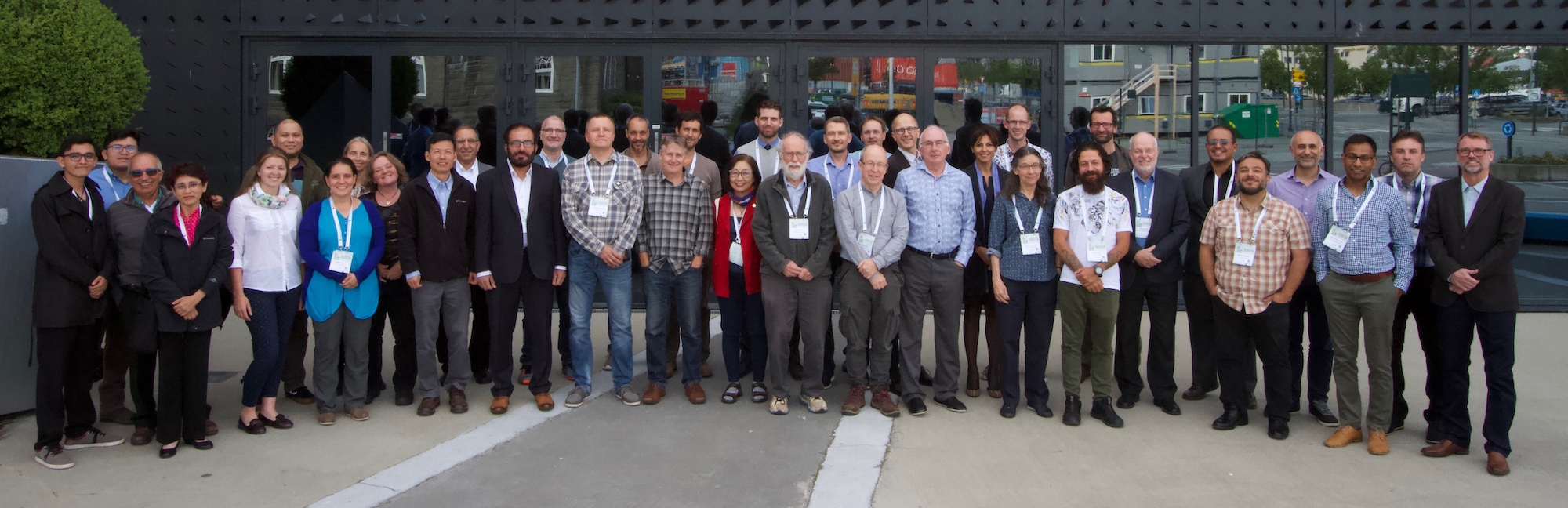
The iBOL Science Committee (SC) and iBOL Board of Directors met alongside the conference to advance thinking around the delivery of BIOSCAN. These discussions identified major elements for inclusion within a strategic plan for the program. This plan must address several major themes:
- An inclusive global community of practice with the skills and linkages needed to survey and monitor all species via barcoding and metabarcoding.
- World-class infrastructure for low-cost sequencing and bioinformatics to support global-scale biodiversity monitoring.
- Efficient and reproducible approaches for DNA-based sampling and monitoring of all eukaryotic groups in all ecosystems.
- Data and knowledge products that maximise the ability of science and society to explore and interpret species richness and patterns of biodiversity.
- Sustainable and persistent operation of core infrastructure and preservation of samples, DNA and data from barcoding and metabarcoding activities.
Within each of these areas, there are challenges to address around increasing engagement within more countries across more stakeholder groups, developing or improving protocols and standards for all taxa and ecosystems, and collaborative efforts to secure the estimated $180 million in funding required for the program globally.

© Copyright 2023 International Barcode of Life Consortium. All Rights Reserved.