
Analysis of 10,000 insect specimens from 11 research sites spanning seven countries has begun at the Centre for Biodiversity Genomics (CBG), thanks to financial support from Prof. Paul Hebert, iBOL’s scientific director.
Upon receiving the 2020 Midori Prize for Biodiversity last fall, Hebert announced that he would donate his prize winnings to locations challenged by lack of access to funding for DNA barcoding and analysis. Hebert’s lab is currently analyzing Malaise trap samples collected from Argentina, Australia, Egypt, Georgia, Lebanon, Mexico, Suriname, and Pakistan.
Read about Prof. Paul Hebert’s Midori Prize
The research site locations are part of the Global Malaise Program (GMP), an international collaboration between the CBG and dozens of contributors worldwide. GMP aims to acquire detailed temporal and spatial information on terrestrial arthropod communities across the globe. Two million specimens have already been sequenced, resulting in more than 153,000 species identifications.
GMP is also a part of iBOL’s seven-year BIOSCAN research program, involving researchers in 40 nations.
| Country | Site |
|---|---|
| Argentina | Calilegua |
| Australia | Busselton |
| Egypt | El-Obour |
| Georgia | Kintrishi |
| Lebanon | Bnebil |
| Mexico | Veracruz |
| Suriname | Paramaribo |
| Pakistan | Jinnah |
| Pakistan | Poonch |
| Pakistan | Bhakkar |
| Pakistan | Thar |

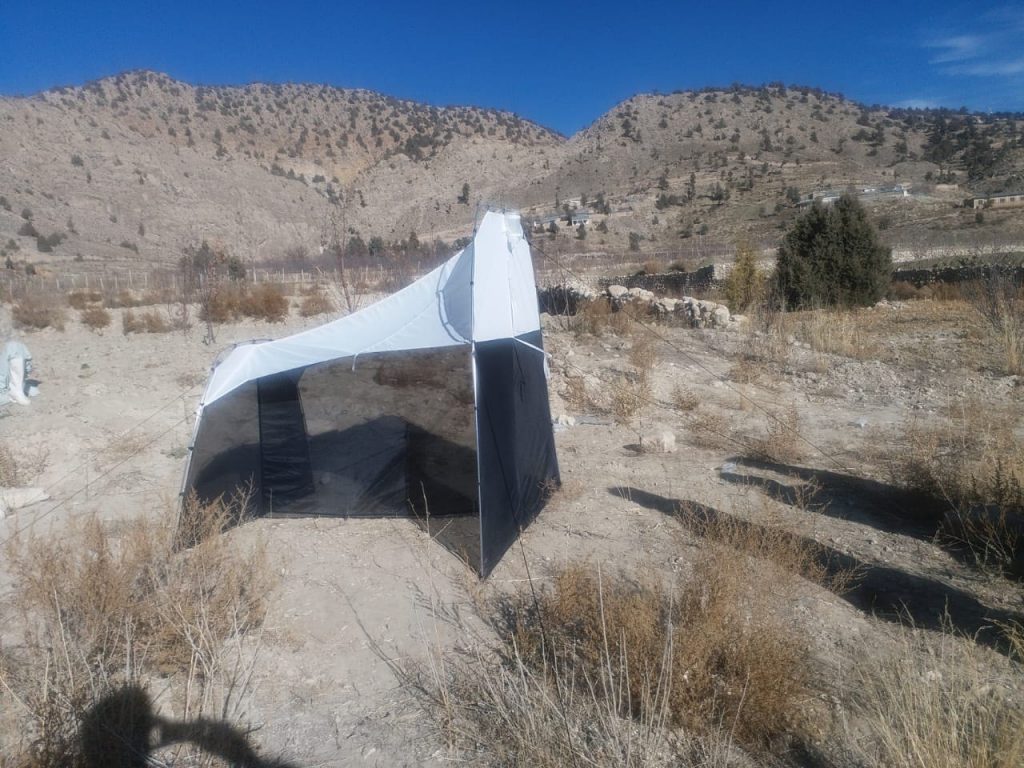
Malaise traps deployed in Suriname (above) and Pakistan (below) as part of the Global Malaise Program.
Media Contacts:
International Barcode of Life
Hannah James
Manager – Media and Strategic Communications
hjames@ibol.org
Global Malaise Program
Centre for Biodiversity Genomics Collections Unit – GMP Coordinator contact@globalmalaise.orgThe International Barcode of Life (iBOL) Consortium is a research alliance with a mission to develop and apply a globally accessible, DNA-based system for the discovery and identification of all multicellular life. Our vision is to illuminate biodiversity for the benefit of our living planet.

© Copyright 2023 International Barcode of Life Consortium. All Rights Reserved.