What can’t be measured won’t be managed: Scientists and U.S. Environmental Protection Agency work together to conserve the Great Lakes

What can’t be measured won’t be managed: Scientists and U.S. Environmental Protection Agency work together to conserve the Great Lakes

What can’t be measured won’t be managed: Scientists and U.S. Environmental Protection Agency work together to conserve the Great Lakes

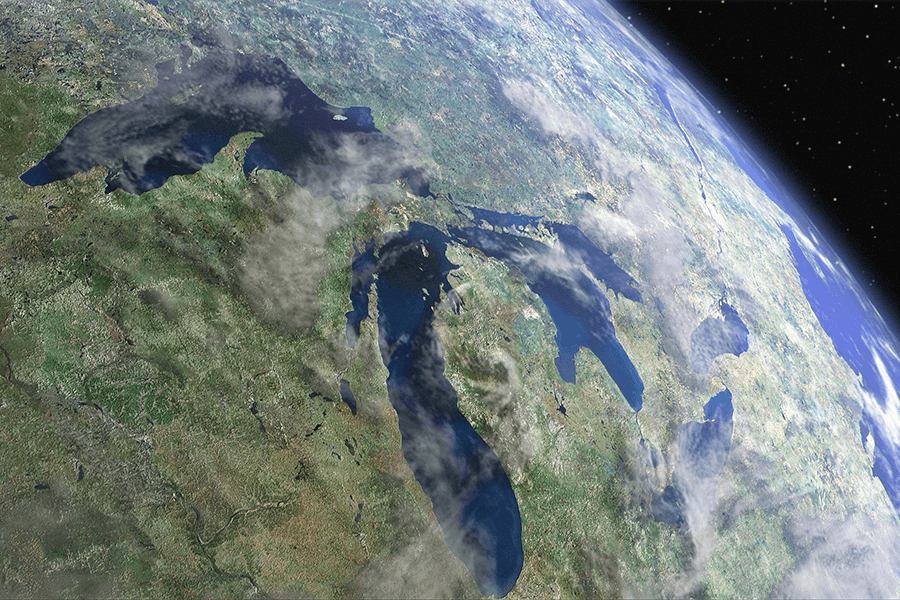
The Laurentian Great Lakes from space.

The Laurentian Great Lakes provide extremely valuable ecosystem services to nearly 40 million citizens of Canada and the United States who inhabit the watershed and many other visitors. These lakes are important for commercial navigation and are one of the most valuable freshwater commercial and recreational fisheries in the world. Such heavy use makes them vulnerable to invasive species, of which there are about 180 known to have invaded the five lakes1. However, the lakes’ biodiversity remains startlingly unknown, especially at lower trophic levels, even with strong scientific communities on both sides of the border.
The Great Lakes DNA Barcoding Project is using new and scalable genetic approaches to fill in the gaps in our knowledge of the native aquatic biodiversity of the Great Lakes and to detect previously undiscovered biological invasions. It will provide a baseline against which to monitor future changes in response to unintentional anthropogenic impacts and quantify efforts to restore biodiversity in parts of the lakes where it has declined.
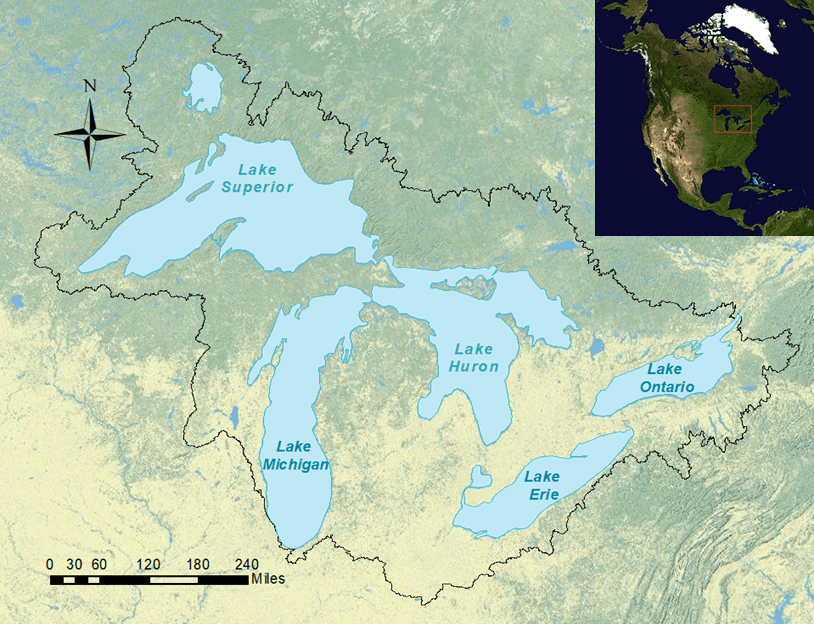
The Great Lakes
The Great Lakes contain 21% of the world’s surface freshwater and are an important resource for agriculture, fishing, recreation, and international shipping. IMAGE CREDIT: 2013 National Geographic Society; Watershed defined by Great Lakes Aquatic Habitat Framework.

Understanding the impacts of anthropogenic changes on freshwater biodiversity is a major challenge with direct relevance to human health and well-being2. Monitoring and managing aquatic biodiversity needs to involve both academic and government institutions as well as stakeholders spanning farmers, fishermen, global transport companies, and policymakers in order to better inform environmental risk assessment, policy development, and natural resource management. Additionally, evaluating and improving private or public efforts to protect biodiversity requires an ability to quantify biodiversity, beginning with species richness.

The lack of scalable tools for assessing biodiversity has been a major impediment when monitoring the health of freshwater ecosystems. These habitats are dominated by small organisms that are difficult to identify and preserve. Species-level identification based on morphology is often impractical or sometimes even impossible. The process involves expert taxonomists and the special treatment of specimens requires significant investments in money, time, and labour. Therefore, when we rely only on these traditional survey practices, many organisms are identified only to genus/subfamily or simply neglected3,4.

DNA barcoding is a useful tool in these situations because the necessary taxonomic resources can be invested in a more targeted approach once a large number of specimens have been assigned a digital species identifier based on its DNA—the DNA barcode—to create a standardized, reproducible, and scalable solution for monitoring, otherwise difficult to quantify species. By digitizing taxonomic information in the form of a barcode, one needs not taxonomic expertise but simply access to sequencing technology for future identification and monitoring requirements. These technologies are becoming more portable and affordable every day and these tools become even more exciting when we apply non-invasive water sampling to monitor entire fauna from the trace amounts of DNA they leave behind (called ‘environmental DNA’)5.

The Great Lakes Barcoding Project, funded by the United States Environmental Protection Agency (EPA), aims to build a comprehensive genetic barcode library for aquatic invertebrates in the Laurentian Great Lakes watershed. The goal is to improve biodiversity monitoring, provide early detection of non-indigenous species, and inform management efforts to protect biodiversity from threats including climate change, pollution, and invasive species.

At the beginning of the project, only limited genetic information was available for many of the Great Lakes species6. The scale of the Great Lakes and its relatively large invertebrate biodiversity requires this research to be highly collaborative. To this end, the project has brought together several taxonomic experts, molecular ecologists, and aquatic biologists across USA and Canada, from the EPA and research institutions including Cornell University, Buffalo State College, University of Notre Dame, Central Michigan University, and the Centre for Biodiversity Genomics at the University of Guelph.

The Great Lakes DNA Barcoding Project team

The Great Lakes DNA Barcoding Project Team: Bret Coggins, Lars Rudstam, Susan Daniel, Adam Frankiewicz, James Watkins, Beth Whitmore, Joe Connolly; bottom row left to right: Sara Westergaard, Michael Pfrender, Bilgenur Baloglu, Kristy Deiner, Ed DeWalt, Alexander Karatayev, Christopher Marshall, Lyubov Burlakova (top to bottom, left to right). In attendance but not pictured: David Lodge, Kara Andres, and Jose Andres. George Rogalskyj and Erik Pilgrim joined electronically.
PHOTO CREDIT: The Great Lakes DNA Barcoding Project


At the end of February 2020, scientists as well as EPA representatives managing or participating in the project gathered at the beautiful Biological Field Station at Cornell University in upstate New York. We shared the latest project updates—everything from taxonomy to biodiversity, from ecological analysis to portable DNA sequencing, and the future of DNA-based monitoring. While the project is still in progress with hundreds of more specimens awaiting analysis, so far, our collaboration has resulted in over 1,000 DNA barcodes spanning over 300 invertebrate species.

This diversity includes more than ten taxonomic classes of invertebrates and is a resource that will improve tracking of non-native and native aquatic species, as well as clarify taxonomic inconsistencies or misrepresentations. The project has stimulated collaborations both within and outside of the main group of researchers and the sharing of specimens, resources, and, most importantly, new ideas and research directions has been an extremely encouraging and productive outcome.

Each plate of specimens sent away for DNA barcode analysis also contains a mix of feelings: satisfaction from a job well done, anticipation of the eventual results, and excitement around the new discoveries that may unfold.

References:

1. Great Lakes Aquatic Nonindigenous Species Information System. Retrieved from: www.glerl.noaa.gov/glansis/index.html

2. IPBES (2019) Global assessment report on biodiversity and ecosystem services of the Intergovernmental Science-Policy Platform on Biodiversity and Ecosystem Services. ES Brondizio, J Settele, S Díaz and HT Ngo (editors). IPBES secretariat, Bonn, Germany.

3. Baloğlu B, Clews E and Meier R (2018) NGS barcoding reveals high resistance of a hyperdiverse chironomid (Diptera) swamp fauna against invasion from adjacent freshwater reservoirs. Frontiers in Zoology, 15(1)

4. Srivathsan A, Baloğlu B, Wang W, Tan WX, Bertrand D, Ng AH, Boey EJ, Koh JJ, Nagarajan N and Meier R (2018) A MinION™‐based pipeline for fast and cost‐effective DNA barcoding. Molecular Ecology Resources, 18(5): 1035–1049.

5. Deiner K, Bik HM, Mächler E, Seymour M, Lacoursière‐Roussel A, Altermatt F, Creer S, Bista I, Lodge DM, De Vere N and Pfrender ME (2017) Environmental DNA metabarcoding: Transforming how we survey animal and plant communities. Molecular Ecology, 26(21): 5872–5895.

6. Trebitz A, Sykes M, Barge J (2019) A reference inventory for aquatic fauna of the Laurentian Great Lakes. J. Great Lakes Res.

this project is supported by the

Great Lakes Restoration Initiative

Written by

Centre for Biodiversity Genomics, Guelph, ON, Canada

Christopher C. Marshall

Christopher C. Marshall

Department of Natural Resources, Cornell University, Ithaca, New York, USA

Lars Rudstam

Department of Natural Resources, Cornell University, Ithaca, New York, USA

David M. Lodge

David M. Lodge

Cornell Atkinson Center for Sustainability and Department of Ecology and Evolutionary Biology, Cornell University, Ithaca, New York, USA

Edward DeWalt

Illinois Natural History Survey, Champaign, Illinois, USA

Paul W. Simonin

Paul W. Simonin

Department of Ecology and Evolutionary Biology, Cornell University, Ithaca, New York, USA

Elizabeth Whitmore

Elizabeth Whitmore

Department of Natural Resources, Cornell University, Ithaca, New York, USA

Lyubov Burlakova

Great Lakes Center, Buffalo State College, Buffalo, NY, USA

Kristy Deiner

Kristy Deiner

Department of Environmental Systems Science, ETH Zurich, Zurich, Switzerland

Don't Miss Out!

Subscribe to the iBOL Barcode Bulletin for updates on DNA barcoding efforts, the iBOL Consortium, and more.

[mc4wp_form]

comment on this article

The Barcode Bulletin moderates comments to promote an informed and courteous conversation. Abusive, profane, self-promotional, or incoherent comments will be rejected. 

Resident or invasive species? Environmental DNA can provide reliable answers

Resident or invasive species? Environmental DNA can provide reliable answers

Resident or invasive species? Environmental DNA can provide reliable answers

Panoramic view of Bacalar Lake including the 40-m deep Esmeralda sinkhole. PHOTO CREDIT: Manuel Elías-Gutiérrez

Monitoring life within large bodies of water – those species that should and shouldn’t live there – can be very expensive and time consuming. To overcome these limitations, efforts in many temperate regions employ methods that use environmental DNA (eDNA), enabling effective and targeted detection of invasive and resident endangered species.

Our study is the first to demonstrate that eDNA-based monitoring can be successfully applied to target the whole fish community in a tropical freshwater system and its adjacent wetlands.

Between 1980 -1990, eDNA was the term introduced to define particulate DNA and it was used to detect and describe microbial communities in marine sediments and phytoplankton communities in the water column1. However, eDNA is presently defined as the genetic material left behind by eukaryotic organisms in the environment, reflecting a rise in the use of eDNA for the detection of vertebrate and invertebrate species in aquatic systems1. The popularity of using eDNA has increased following the development of next-generation sequencing, advances in quantitative PCR (qPCR), and the growth of DNA barcodes libraries such as the Barcode of Life Data System (BOLD), providing a quicker and more taxonomically comprehensive tool for biodiversity assessments.


South end of lake Bacalar with the sinkhole Cenote Azul.
PHOTO CREDIT: Manuel Elías-Gutiérrez

Lake Bacalar is the largest epicontinental habitat in Mexico’s Yucatan Peninsula, and it is renowned for its striking blue color, clarity of the water, and for the world’s largest occurrence of living stromatolites, a calcareous mound built up of layers of lime-secreting cyanobacteria. Due to the presence of sediments derived from karst limestone, it represents the world’s largest fresh groundwater-feed ecosystem. The northern part of Lake Bacalar is connected to a complex system of lagoons and the southern part has an indirect connection to the sea via a wetland system that connects with Hondo River and enters Chetumal Bay. This river has been heavily impacted by the discharge of organic waste and pesticides, by vegetation clearing, and by the introduction of invasive fish such as tilapia and the Amazon sailfin catfish (Pterygoplichthys pardalis) 2-4, first detected in 2013 4. The Amazon sailfin catfish is a serious threat to the fragile stromatolite ecosystem due to its burrowing habits and competition with local fish. The impact of declining water quality and the rise of invasive species on the native fish fauna needs to be carefully monitored in aid of conservation efforts of Lake Bacalar.

A team of researchers from the Instituto Tecnológico de Chetumal and El Colegio de la Frontera Sur sampled eight localities in December 2015, and January and April 2016. After each of 14 sampling events, water and sediment samples were immediately placed on ice before transportation to the lab in Chetumal. To minimize eDNA degradation, we filtered water samples within seven hours of collection. All filters and sediments were stored at -18°C before being transported on ice from Chetumal to the Centre for Biodiversity Genomics in Guelph, Canada, where DNA extraction was undertaken.


Water sampling between stromatolites.
PHOTO CREDIT: Miguel Valadez

We sequenced short fragments (<200 bp) of the cytochrome c oxidase I (COI) gene on Ion Torrent PGM or S5 platforms. In total, we recovered eDNA sequences from 75 species of vertebrates including 47 fishes, 15 birds, seven mammals, five reptiles, and one amphibian. Although all species are known from this region, six fish species represent new records for the study area, while two require verification (Vieja fenestrata and Cyprinodon beltrani /simus), because their presence is unlikely in this ecosystem. While there were species (two birds, two mammals, one reptile) only detected from sediments, water samples recovered a much higher diversity (52 species), indicating better eDNA preservation in the slightly alkaline Bacalar water.  Because DNA from the Amazon sailfin catfish was not detected, we used a mock eDNA experiment that confirmed our methods were effective.

Interesting findings include the detection of rare species, such as an anteater Tamandua mexicana, which was detected by both PGM and S5 instruments from a river sample (Juan Sarabia), and migratory birds, such as warbler Oreothlypis peregrina known to overwinter in the Yucatan Peninsula.

Docks in front of Bacalar town
PHOTO CREDIT: Miguel Valadez

Our study indicates that eDNA can be successfully applied to monitor vertebrates in a tropical oligotrophic lake as well as more eutrophic (higher primary production) wetlands and can aid conservation and monitoring programs in tropical areas by improving our capacity to map occurrence records for resident and invasive species.

Our next step is to convince Mexican and international stakeholders to implement these methodologies and establish a permanent biomonitoring system for this and other pristine freshwater ecosystems found in Yucatan Peninsula. This work is necessary to detect effects of climate change, declining water quality, and the increasing tourism activities in this region.

References:

1. Díaz-Ferguson EE, Moyer GR (2014) History, applications, methodological issues and perspectives for the use of environmental DNA (eDNA) in marine and freshwater environments. Revista de Biología Tropical 62: 1273-1284. DOI: 10.15517/RBT.V62I4.13231

2. Wakida-Kusunoki AT, Luis Enrique Amador-del Ángel (2011) Aspectos biológicos del pleco invasor Pterygoplichthys pardalis (Teleostei : Loricariidae) en el río Palizada, Campeche, México. Revista Mexicana de Biodiversidad 82: 870-878

3. Alfaro REM, Fisher JP, Courtenay W, Ramírez Martínez C, Orbe-Mendoza A, Escalera Gallardo C, et al. (2009) Armored catfish (Loricariidae) trinational risk assessment guidlines for aquatic alien invasive species. Test cases for the snakeheads (Channidae) and armored catfishes (Loricariidae) in North American inland waters. Montreal, Canada: Commission for Environmental Cooperation. pp. 25-49.

4. Schmitter-Soto JJ, Quintana R, Valdéz-Moreno ME, Herrera-Pavón RL, Esselman PC (2015) Armoured catfish (Pterygoplichthys pardalis) in the Hondo River basin, Mexico-Belize. Mesoamericana 19: 9-19.

Written by

Natalia V. Ivanova

Natalia V. Ivanova

Centre for Biodiversity Genomics, Guelph, ON, Canada

Martha Valdez-Moreno

Martha Valdez-Moreno

El Colegio de la Frontera Sur, Unidad Chetumal, Chetumal, Mexico

Manuel Elías-Gutiérrez

Manuel Elías-Gutiérrez

El Colegio de la Frontera Sur, Unidad Chetumal, Chetumal, Mexico

doi: 10.21083/ibol.v9i1.5474

Don't Miss Out!

Subscribe to the iBOL Barcode Bulletin for updates on DNA barcoding efforts, the iBOL Consortium, and more.

[mc4wp_form]

comment on this article

The Barcode Bulletin moderates comments to promote an informed and courteous conversation. Abusive, profane, self-promotional, or incoherent comments will be rejected.