
How BIOSCAN is inspiring the next generation of researchers
“They were enlightened by the idea of discovering new species and by the possibility of doing so using DNA barcoding tools.”
Written by: Dr. Michelle Lynn D’Souza
Three Lebanese researchers, motivated by a desire to understand their country’s biodiversity, travelled to Canada for the first time in July to train with global leaders in DNA barcoding at the Centre for Biodiversity Genomics (CBG).

Prof. Magda Bou Dagher Kharrat
Triggering scientific curiosity and interest in biodiversity is a significant, yet arguably underappreciated challenge faced by the research community. While it might be easier to garner enthusiasm for elephants, tigers, or wolves – the charismatic megafauna – it is a lot more difficult to encourage interest in tiny insects and insignificant plants. According to Lebanese researcher, Magda Bou Dagher Kharrat, professor and department chair of the Faculty of Science at the University Saint-Joseph in Beirut, inspiring students can be one of her biggest challenges. “If I succeed to open even some students’ eyes to the exceptional beauty of each creature and get them interested in the uniqueness of their adaptations, I consider my mission accomplished,” said Prof. Kharrat, who also represents Lebanon on the International Barcode of Life (iBOL) Consortium’s Science Committee.
As a plant geneticist interested in the phylogeny, phylogeography, and evolutionary processes that shape trees and flowering plants, Prof. Kharrat’s research has been instrumental in defining conservation policies and forest ecosystem restoration strategies in the country. As iBOL’s Lebanese Science Committee member, Prof. Kharrat is now embracing the world of insects, helping deploy several Malaise traps in the mountains of Lebanon as a part of TRACE (Tracking the Response of Arthropods to Changing Environments), a major research theme within the International Barcode of Life (iBOL) Consortium’s BIOSCAN program.
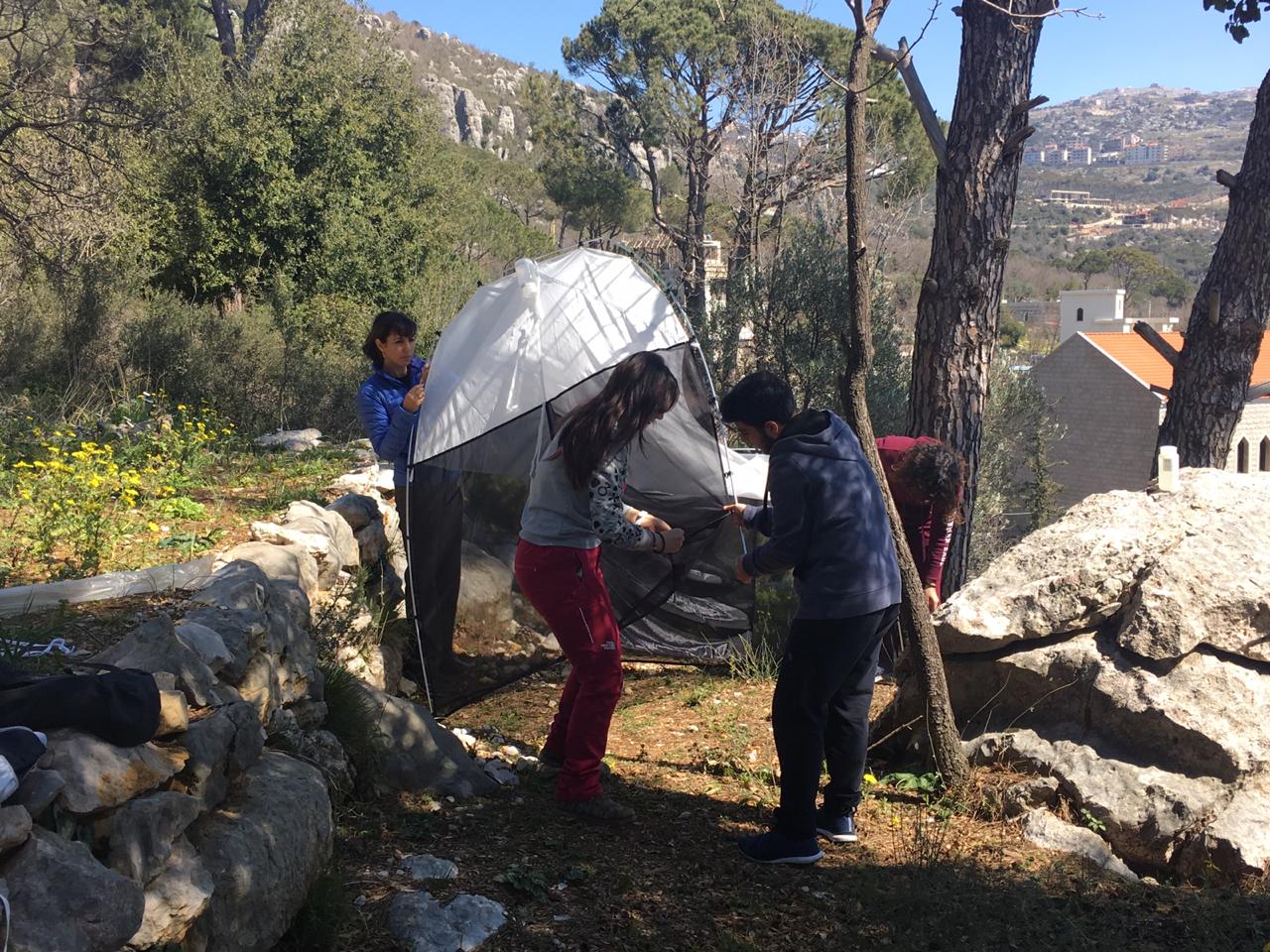
Malaise trap deployed in Bnabil, Lebanon by Prof. Kharrat’s group
It was after an ecology lecture where Prof. Kharrat discussed iBOL and DNA barcoding that Edy Haoui and Pierre Malychev – two undergraduate students in Biology and Biochemistry – came to see her immediately. Prof. Kharrat said, “They were enlightened by the idea of discovering new species and by the possibility of doing so using DNA barcoding tools.” Not too long after, the students were joined by Prof. Kharrat’s molecular lab manager, Carole Saliba, and the trio installed their first Malaise trap in a remote area under oak and pine trees in Bnabil, a small village in Mount-Lebanon situated at 1,100 meters above sea level.
A few months later, on July 1st, Carole, Edy, and Pierre travelled to the CBG with several Malaise trap bottles full of insects from Lebanon, ready for a crash course in DNA barcoding. Under the guidance of CBG research scientist, Dr. Muhammad Ashfaq the team quickly learned about the DNA barcoding workflow – from sorting insect specimens to databasing to sequence editing.
“They were very enthusiastic to learn insect taxonomy, a science which many biologists dread!” said Dr. Ashfaq, who has been instrumental in developing the international training programs led by the CBG. “Their teamwork and support for each other through the process was marvellous,” he said.
They were apprehensive at first, not ever having worked with insects, and felt it might be impossible to learn all that is needed to identify and barcode so many specimens in such a short time. It was easy enough to reassure them having been in the very same position when I first began my master’s with Prof. Paul Hebert, director of the CBG. It didn’t take long for them to feel as I had, that the Centre has an incredible training program and that the research staff who work across the barcoding pipeline are knowledgeable, patient, and passionate.
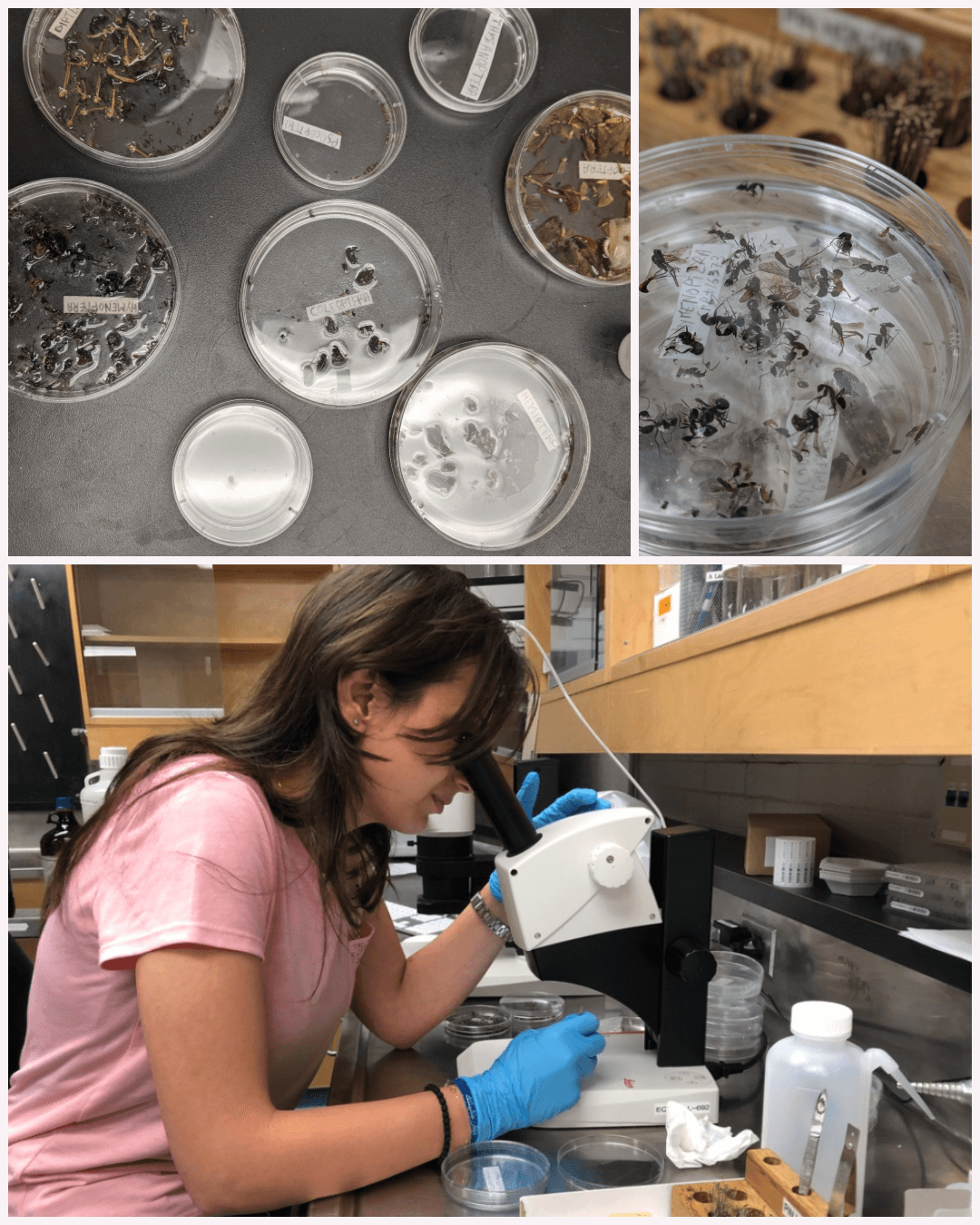
Carole Saliba sorting Malaise trap specimens from Lebanon.

Edy Hauoi taking a break from databasing specimens.
“From day one we all had such amazing support from the whole CBG team and in just four weeks we learned the whole process of DNA barcoding,” said Pierre. “The most interesting part was analyzing and editing DNA sequences obtained in the lab.”
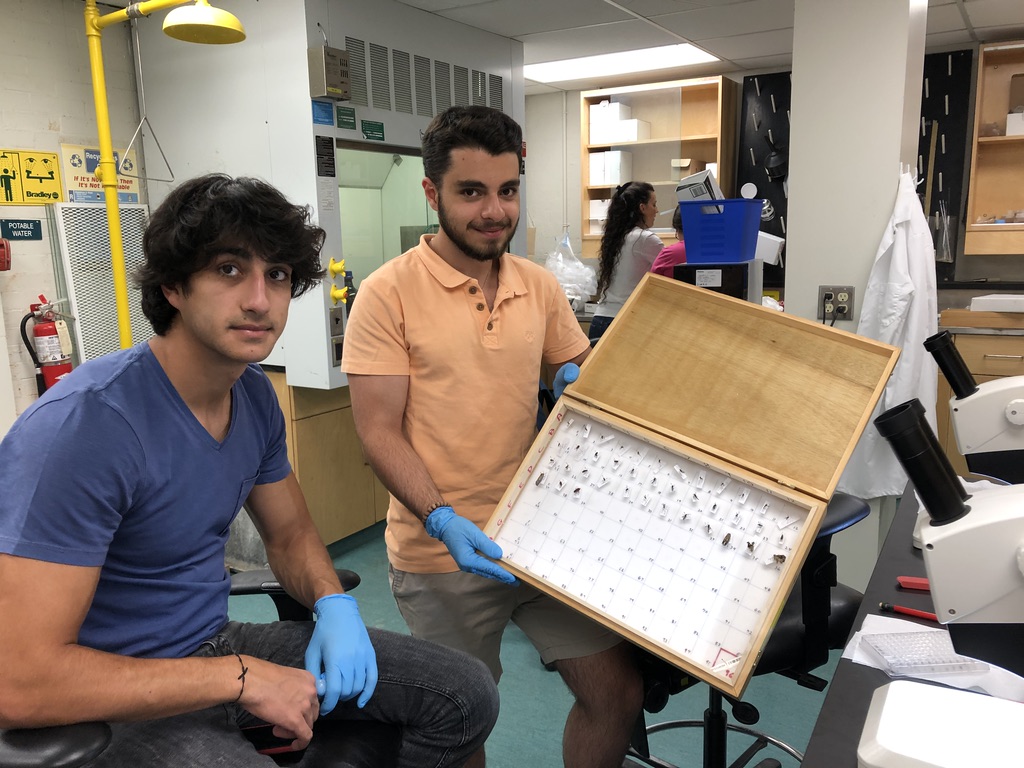
Pierre Malychev and Edy Hauoi working to finish pinning specimens in a Schmidt box.
“This collaboration is a big opportunity for Lebanon to share its huge Middle Eastern biodiversity with the world for many years to come,” added Edy.
While Edy and Pierre left after four weeks, Carole stayed on for another two weeks to get hands-on-training using the new DNA barcoding platform – mBRAVE – developed to make working with high-throughput sequencing data more efficient. Carole learned how to use the cloud-based platform to deposit, analyze, and visualize metabarcoding data for an exciting new project in her lab that aims to understand the diets of key animal species crucial for reforestation projects in Lebanon.
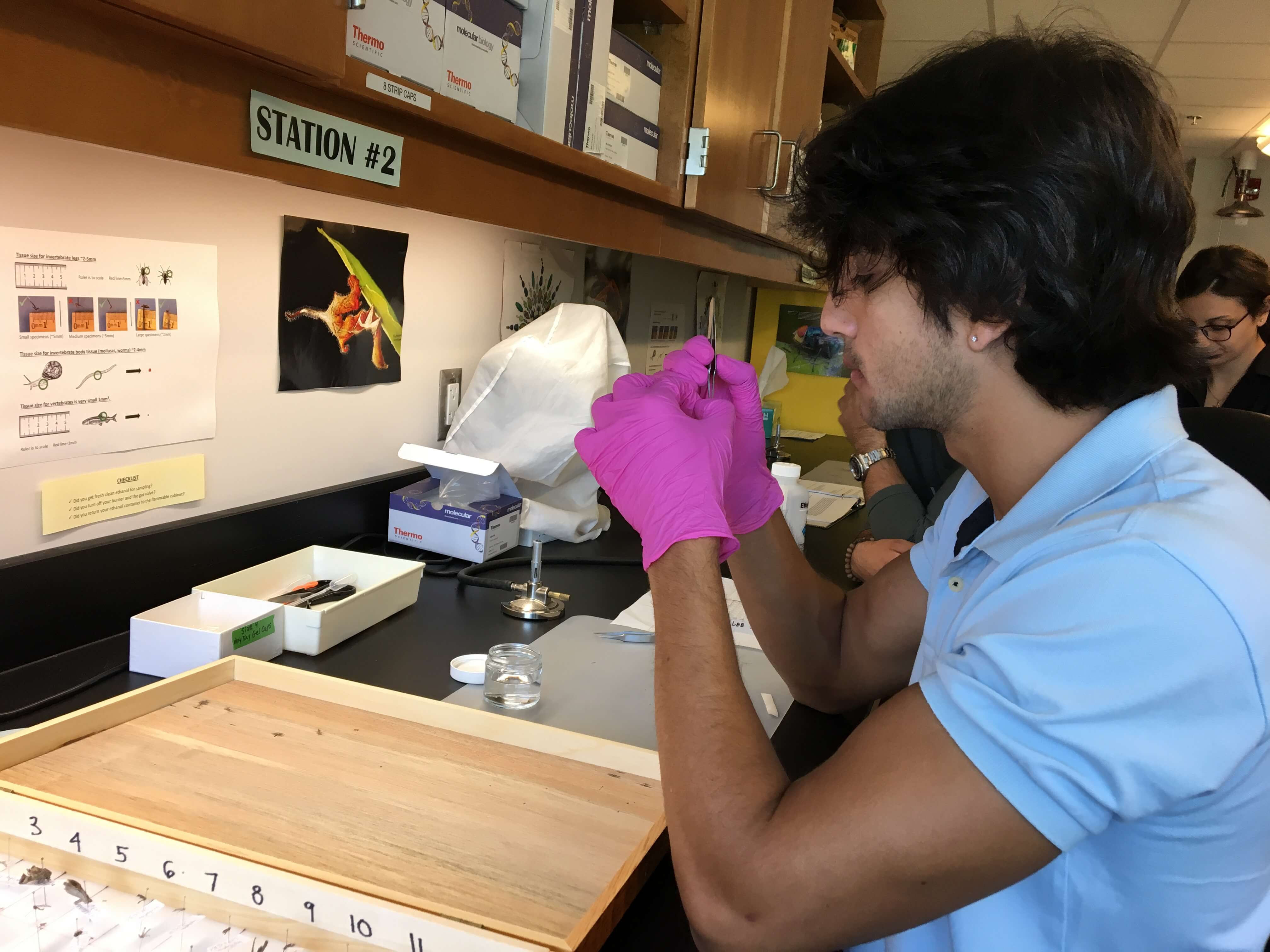
Pierre Malychev tissue sampling pinned specimens.
“We will implement what we have learned in our lab as well as try to encourage nearby nations to join efforts and be engaged in BIOSCAN,” said Carole. “My six weeks of training has ended but, for me, this is just the beginning of a new and exciting chapter.”
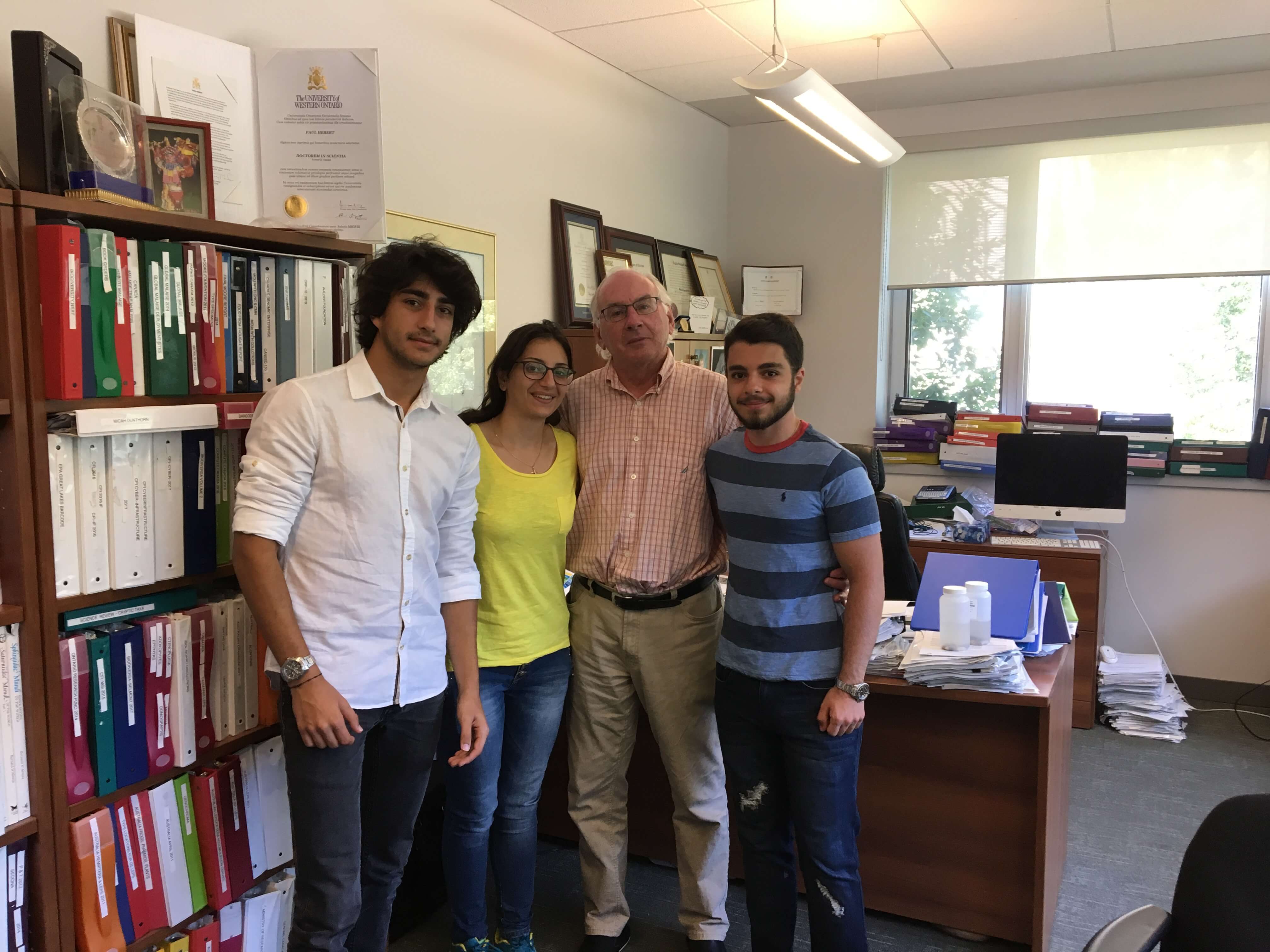
Pierre Malychev, Carole Saliba, Paul Hebert, and Edy Hauoi (left to right) at the end of their visit to the Centre for Biodiversity Genomics.
“BIOSCAN has truly captured the imagination of young Lebanese researchers,” said Prof. Kharrat. “They are discovering how great ideas can gather support which can lead to tremendous change.”
Other links:
Video of the Research conducted at Saint-Joseph University on the Biodiversity of Lebanon
Jouzour Loubnan – Reforestation NGO Dr. Kharrat co-founder
Media Contacts:
International Barcode of Life Consortium
Hannah James
Manager – Media and Strategic Communications
hjames@ibol.org
The International Barcode of Life (iBOL) Consortium is a research alliance with a mission to develop and apply a globally accessible, DNA-based system for the discovery and identification of all multicellular life. Our vision is to illuminate biodiversity for the benefit of all life.