Thirteen Years of DNA Barcoding in Germany – Achievements and Prospects
Thirteen Years of DNA Barcoding in Germany – Achievements and Prospects

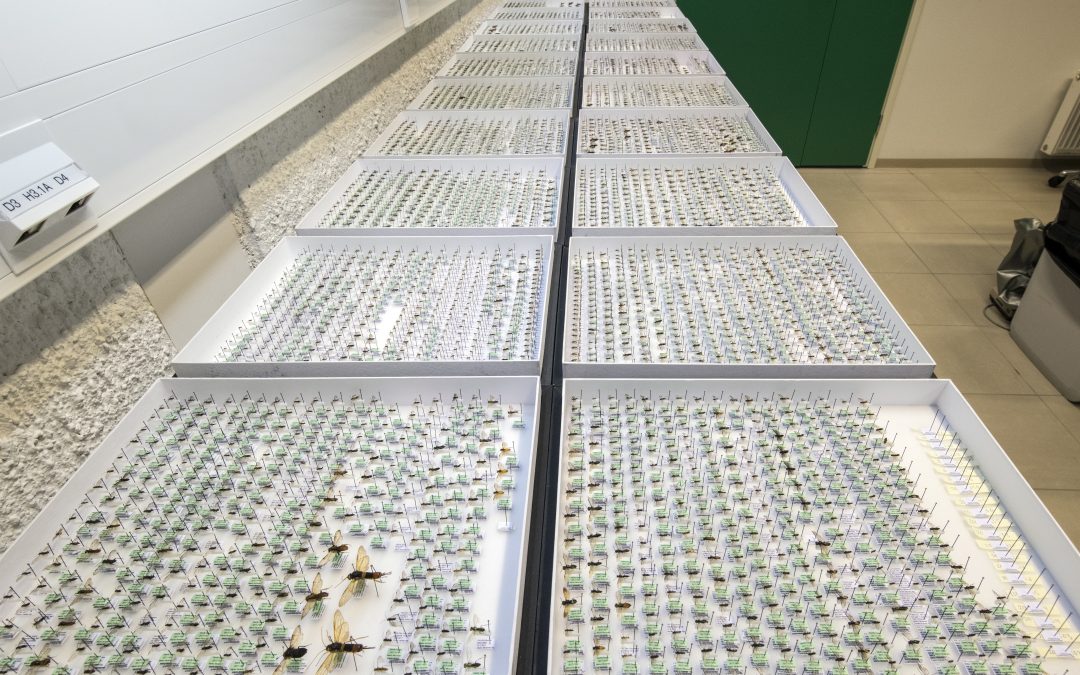
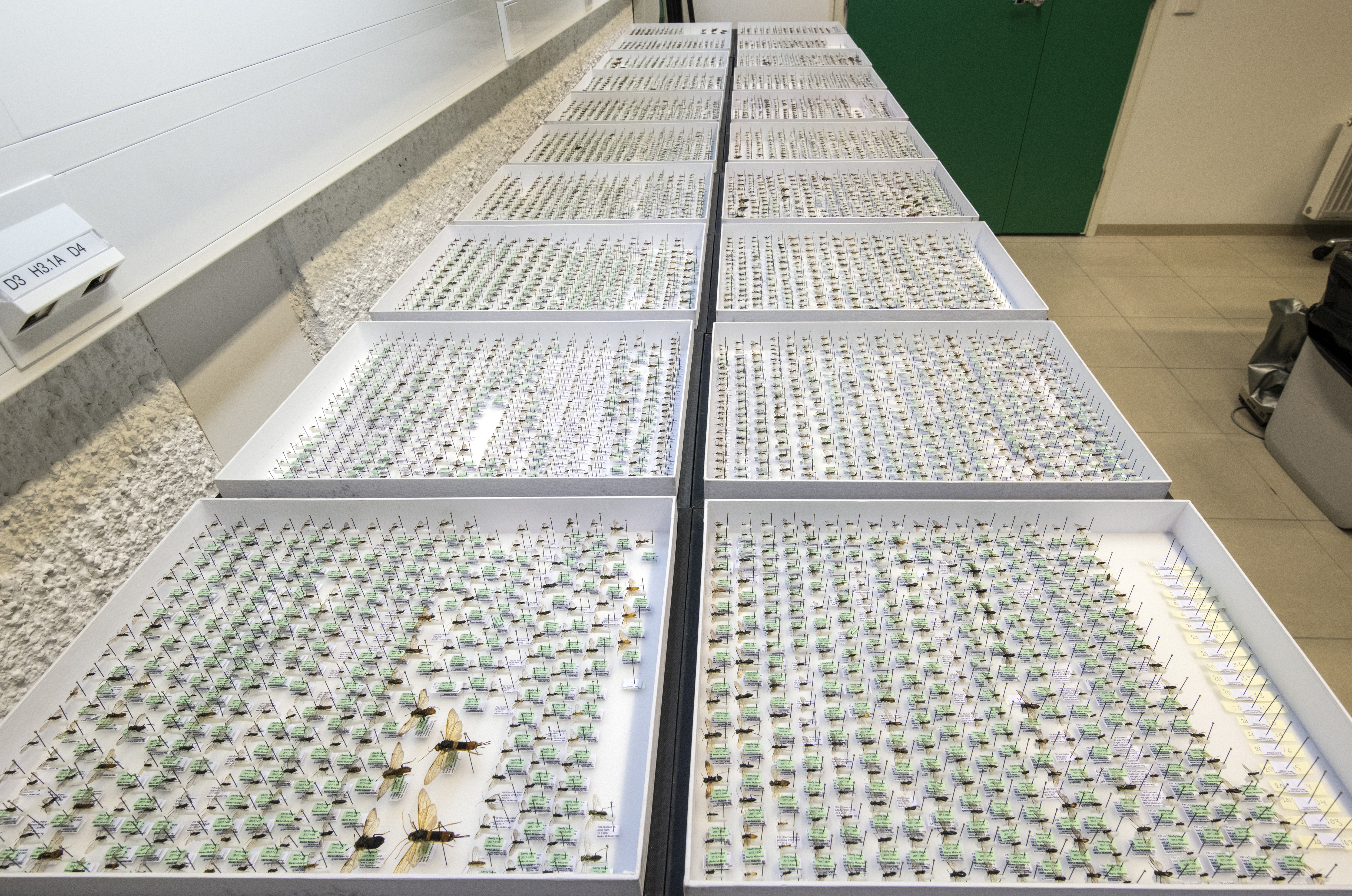
Since DNA barcoding started in Germany 13 years ago, barcodes of some 55,000 species have been assembled from all continents, and the Zoologische Staatssammlung München (ZSM) is now globally among the top three providers of barcoding voucher specimens, reflecting the analysis of more than 250,000 specimens. In less than a decade, DNA barcodes of more than 24,000 German species of metazoans have been assembled as part of two major national DNA barcoding initiatives: the ‘Barcoding Fauna Bavarica’ (BFB) and the ‘German Barcode of Life’ (GBOL) projects.


DNA barcoding activities in Germany have resulted in several major data releases, for example with Coleoptera (Hendrich et al., 2015, Raupach et al., 2016, 2018, Rulik et al., 2017), Diptera (Morinière et al., 2019 accepted), aquatic insects (Ephemeroptera, Plecoptera, Trichoptera, Morinière et al., 2017), Heteroptera (Raupach et al., 2014, Havemann et al., 2018 ), Hymenoptera (Schmidt et al., 2015, 2017, Schmid-Egger et al., 2018), Lepidoptera (Hausmann et al., 2011a, 2011b), Neuroptera (Morinière et al., 2014), Orthoptera (Hawlitschek et al., 2017), Araneae and Opiliones (Astrin et al., 2016), and Myriapoda (Spelda et al., 2011, Wesener et al., 2015).
In addition to extending the DNA barcode library, Germany has invested in examining the potential of DNA metabarcoding for the rapid assessment of species assemblages as part of studies that address a range of different research questions, including Malaise trap surveys (Morinière et al., 2016, Hardulak et al.,, in prep), analysis of feces for dietary inference (Hawlitschek et al., 2018), species identification in forensic entomology (Chimeno et al., 2019), and food composition studies (Gerdes et al., 2019, Michel & Hardulak, submitted).
Germany will strive to maintain its role as a major contributor to the global DNA barcode library and will aim to make a substantial contribution to the BIOSCAN initiative.
References:
Astrin JJ, Höfer H, Spelda J, Holstein J, Bayer S, Hendrich L, Huber BA, Kielhorn KH, Krammer HJ, Lemke M, Monje JC, Morinière J, Rulik B, Petersen M, Janssen H, Muster C (2016) Towards a DNA barcode reference database for spiders and harvestmen of Germany. PLoS ONE 11: e0162624. https://doi.org/10.1371/journal.pone.0162624
Chimeno C, Morinière J, Podhorna J, Hardulak L, Hausmann A, Reckel F, Grunwald JE, Penning R, Haszprunar G (2019) DNA barcoding in forensic entomology – Establishing a DNA reference library of potentially forensic relevant arthropod species. Journal of Forensic Sciences 64: 593–601. https://doi.org/10.1111/1556-4029.13869
Hausmann A, Haszprunar G, Hebert PDN (2011) DNA barcoding the geometrid fauna of Bavaria (Lepidoptera): successes, surprises, and questions. PLoS ONE 6: e17134. https://doi.org/10.1371/journal.pone.0017134
Hausmann A, Haszprunar G, Segerer AH, Speidel W, Behounek G, Hebert PDN (2011) Now DNA-barcoded: the butterflies and larger moths of Germany (Lepidoptera: Rhopalocera, Macroheterocera). Spixiana 34: 47–58.
Havemann N, Gossner MM, Hendrich L, Morinière J, Niedringhaus R, Schäfer P, Raupach MJ (2018) From water striders to water bugs: the molecular diversity of aquatic Heteroptera (Gerromorpha, Nepomorpha) of Germany based on DNA barcodes. PeerJ 6: e4577. https://doi.org/10.7717/peerj.4577
Hawlitschek O, Morinière J, Lehmann GUC, Lehmann AW, Kropf M, Dunz A, Glaw F, Detcharoen M, Schmidt S, Hausmann A, Szucsich NU, Caetano-Wyler SA, Haszprunar G (2017) DNA barcoding of crickets, katydids and grasshoppers (Orthoptera) from Central Europe with focus on Austria, Germany and Switzerland. Molecular Ecology Resources 17: 1037–1053. https://doi.org/10.1111/1755-0998.12638
Hawlitschek O, Fernández-González A, Balmori-de la Puente A, Castresana J (2018) A pipeline for metabarcoding and diet analysis from fecal samples developed for a small semi-aquatic mammal. PLoS ONE 13: e0201763. https://doi.org/10.1371/journal.pone.0201763
Hendrich L, Morinière J, Haszprunar G, Hebert PDN, Hausmann A, Köhler F, Balke M (2015) A comprehensive DNA barcode database for Central European beetles with a focus on Germany: adding more than 3500 identified species to BOLD. Molecular Ecology Resources 15: 795–818. https://doi.org/10.1111/1755-0998.12354
Michel M, Hardulak LA, Meier-Dörnberg T, Morinière J, Hausmann A, Back W, Haszprunar G, Jacob F, Hutzler M (2019) High throughput sequencing as a novel quality control method for industrial yeast starter cultures. BrewingSience (accepted)
Morinière J, Hendrich L, Balke M, Beermann AJ, König T, Hess M, Koch S, Müller R, Leese F, Hebert PDN, Hausmann A, Schubart CD, Haszprunar G (2017) A DNA barcode library for Germany′s mayflies, stoneflies and caddisflies (Ephemeroptera, Plecoptera and Trichoptera). Molecular Ecology Resources 17: 1293–1307. https://doi.org/10.1111/1755-0998.12683
Morinière J, Balke M, Doczkal D, Geiger MF, Hardulak LA, Haszprunar G, Hausmann A, Hendrich L, Regalado L, Rulik B, Schmidt S, Wägele JW, Hebert PDN (2019) A DNA barcode library for 5,200 German flies and midges (Insecta: Diptera) and its implications for metabarcoding-based biomonitoring. Molecular Ecology Resources (accepted)
Morinière J, Hendrich L, Hausmann A, Hebert P, Haszprunar G, Gruppe A (2014) Barcoding fauna Bavarica: 78% of the Neuropterida fauna barcoded! PLoS ONE 9: e109719. https://doi.org/10.1371/journal.pone.0109719
Raupach M, Hannig K, Moriniere J, Hendrich L (2016) A DNA barcode library for ground beetles (Insecta, Coleoptera, Carabidae) of Germany: The genus Bembidion Latreille, 1802 and allied taxa. ZooKeys 592: 121–141. https://doi.org/10.3897/zookeys.592.8316
Raupach MJ, Hannig K, Morinière J, Hendrich L (2018) A DNA barcode library for ground beetles of Germany: the genus Amara Bonelli, 1810 (Insecta, Coleoptera, Carabidae). ZooKeys 759: 57–80. https://doi.org/10.3897/zookeys.759.24129
Raupach MJ, Hendrich L, Küchler SM, Deister F, Morinière J, Gossner MM (2014) Building-up of a DNA barcode library for True Bugs (Insecta: Hemiptera: Heteroptera) of Germany reveals taxonomic uncertainties and surprises. PLoS ONE 9: e106940. https://doi.org/10.1371/journal.pone.0106940
Rulik B, Eberle J, von der Mark L, Thormann J, Jung M, Köhler F, Apfel W, Weigel A, Kopetz A, Köhler J, Fritzlar F, Hartmann M, Hadulla K, Schmidt J, Hörren T, Krebs D, Theves F, Eulitz U, Skale A, Rohwedder D, Kleeberg A, Astrin JJ, Geiger MF, Wägele JW, Grobe P, Ahrens D (2017) Using taxonomic consistency with semi-automated data pre-processing for high quality DNA barcodes. Methods in Ecology and Evolution 8: 1878–1887. https://doi.org/10.1111/2041-210X.12824
Schmid-Egger C, Achterberg K van, Neumeyer R, Morinière J, Schmidt S (2017) Revision of the West Palaearctic Polistes Latreille, with the descriptions of two species – an integrative approach using morphology and DNA barcodes (Hymenoptera, Vespidae). ZooKeys 713: 53–112. https://doi.org/10.3897/zookeys.713.11335
Schmid-Egger C, Straka J, Ljubomirov T, Blagoev GA, Morinière J, Schmidt S (2018) DNA barcodes identify 99 percent of apoid wasp species (Hymenoptera: Ampulicidae, Crabronidae, Sphecidae) from the Western Palearctic. Molecular Ecology Resources. 19(2):476–484. https://doi.org/10.1111/1755-0998.12963
Schmidt S, Schmid-Egger C, Morinière J, Haszprunar G, Hebert PDN (2015) DNA barcoding largely supports 250 years of classical taxonomy: identifications for Central European bees (Hymenoptera, Apoidea partim). Molecular Ecology Resources 15: 985–1000. https://doi.org/10.1111/1755-0998.12363
Schmidt S, Taeger A, Morinière J, Liston A, Blank SM, Kramp K, Kraus M, Schmidt O, Heibo E, Prous M, Nyman T, Malm T, Stahlhut J (2017) Identification of sawflies and horntails (Hymenoptera, “Symphyta”) through DNA barcodes: successes and caveats. Molecular Ecology Resources 17: 670–685. https://doi.org/10.1111/1755-0998.12614
Spelda J, Reip H, Oliveira Biener U, Melzer R (2011) Barcoding Fauna Bavarica: Myriapoda – a contribution to DNA sequence-based identifications of centipedes and millipedes (Chilopoda, Diplopoda). ZooKeys 156: 123–139. https://doi.org/10.3897/zookeys.156.2176
Wesener T, Voigtländer K, Decker P, Oeyen JP, Spelda J, Lindner N (2015) First results of the German Barcode of Life (GBOL) – Myriapoda project: Cryptic lineages in German Stenotaenia linearis (Koch, 1835) (Chilopoda, Geophilomorpha). ZooKeys 510: 15–29. https://doi.org/10.3897/zookeys.510.8852
Written by

Axel Hausmann
Zoologische Staatssammlung München, Munich, Germany

Stefan Schmidt
Zoologische Staatssammlung München, Munich, Germany

Jérome Morinière
Zoologische Staatssammlung München, Munich, Germany
Don't Miss Out!
Subscribe to the iBOL Barcode Bulletin for updates on DNA barcoding efforts, the iBOL Consortium, and more.